
Custom CRM with a customer database and decision makers: banchem.sk case study, Slovakia
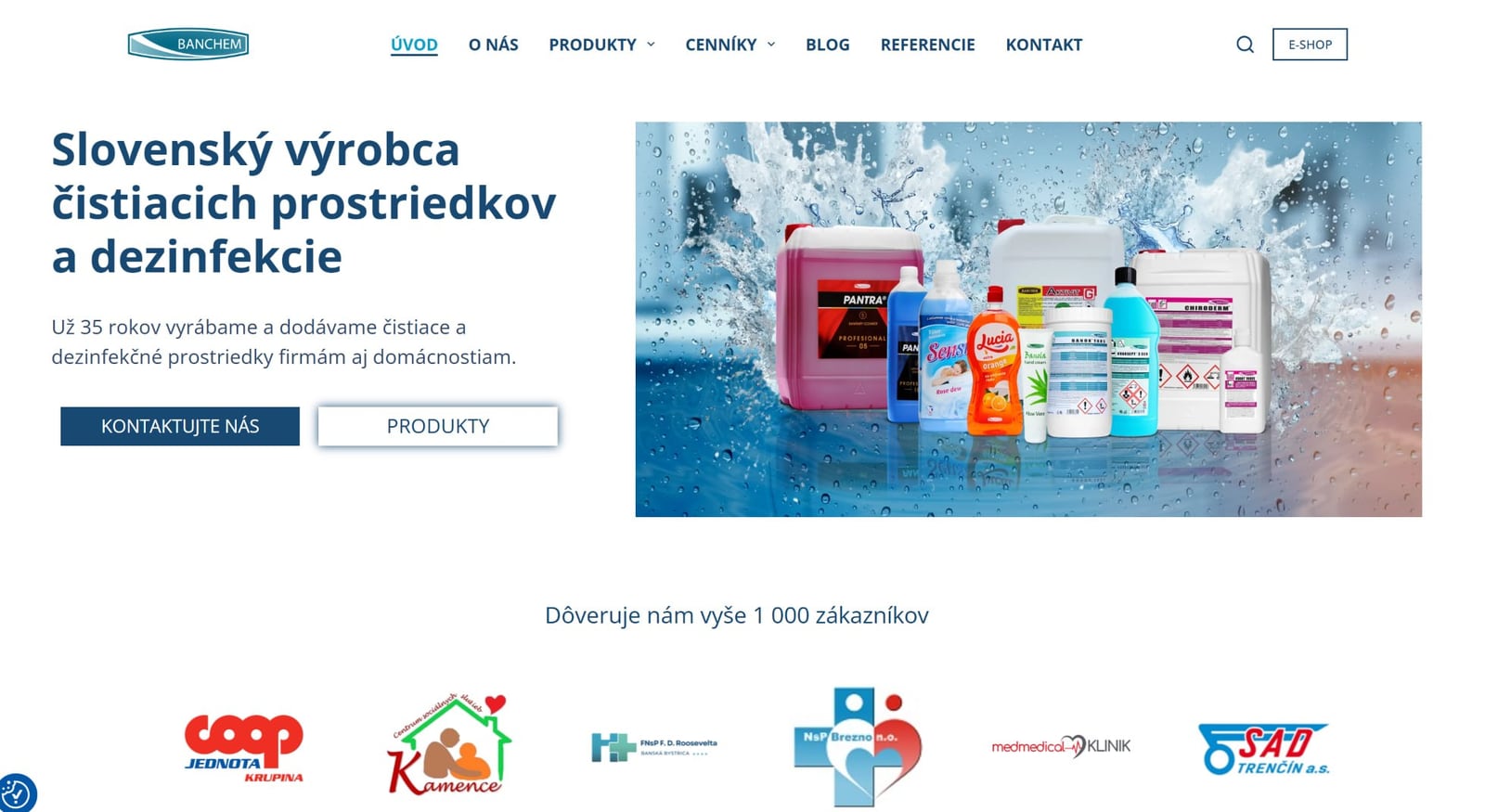
The client came to us with the task of building a sales accounting system tailored to their needs—without a subscription fee and without features that no one would use. As the project progressed, the task grew: a targeted database of decision-makers' contacts was also needed, tailored to the client's specific niche.
Every week, the author's Telegram channel publishes new cases and approaches to business automation with AI. You can subscribe here: t.me/promtvibeadd.
Case Study: banchem.sk, a Slovak manufacturer of swimming pool chemicals
The client was banchem.sk, a Slovakian company that produces and supplies cleaning chemicals and disinfectants, including for swimming pools, to businesses and private clients. Sales management on the project was led by a young, newly established sales department manager responsible for working with spa centers.
The task was simple: a custom sales accounting system instead of a ready-made service. Over the course of the project, it evolved into a CRM with a built-in decision-making database for a specific niche—hotel spas and spa centers that require pool chemicals.
Why the customer rejected a ready-made CRM
Standard, ready-made CRMs were discarded at the outset: maintenance is expensive, and monthly payments are incurred regardless of whether the team uses all the service's features.
| Ready-made CRM by subscription | Your own CRM for the task | |
|---|---|---|
| Payment | Monthly, according to the service tariff | One-time fee for development |
| Functions | Standard set, some parts are not needed | Just what the sales department needs |
| Contact database | It needs to be connected separately. | Built-in from the start, tailored to the client's niche |
| Flexibility to suit your niche | Customization is limited to the service template | Assembled for specific decision-making scoring |
We developed a CRM system that integrates transaction management and a targeted customer base with decision-maker contacts.
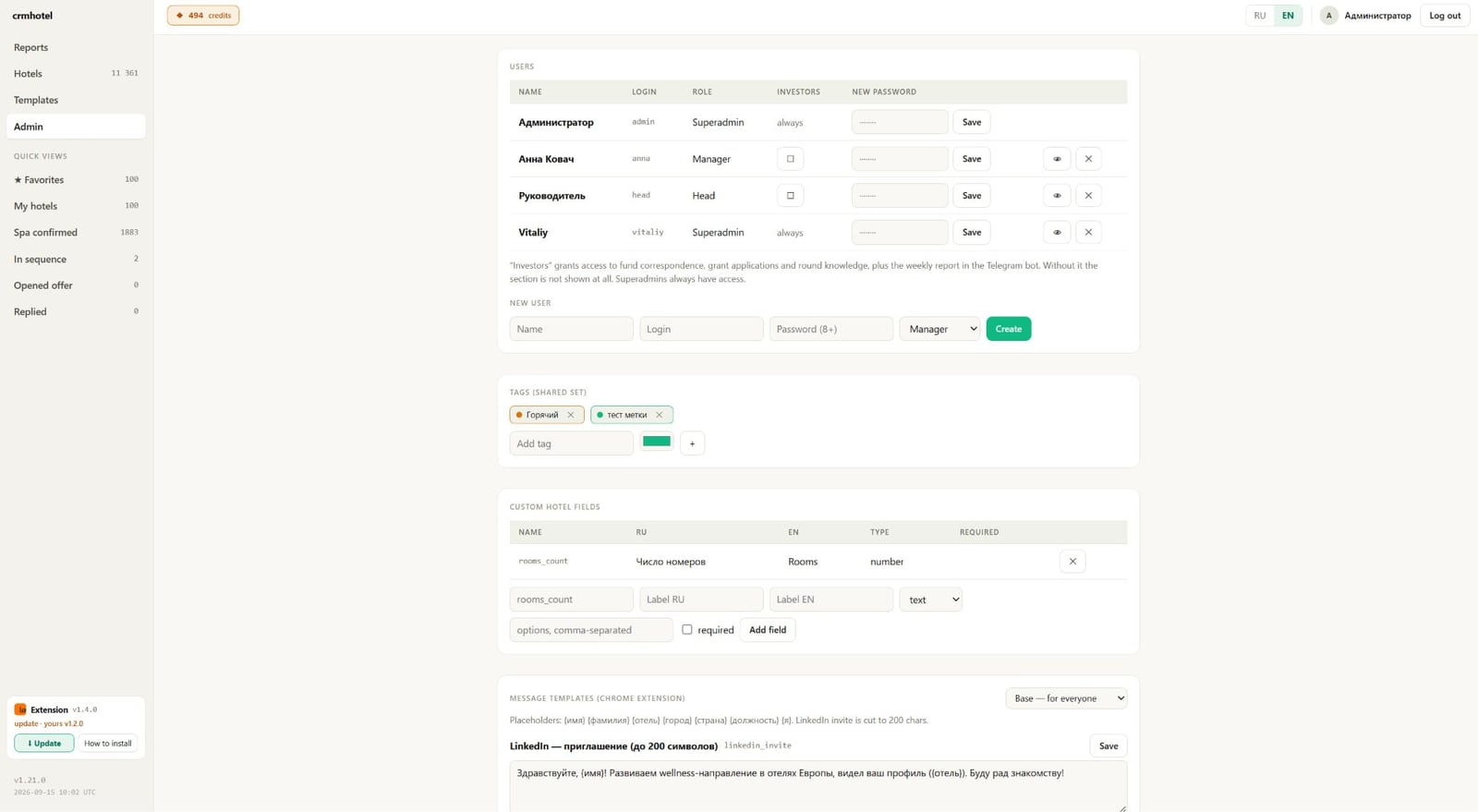
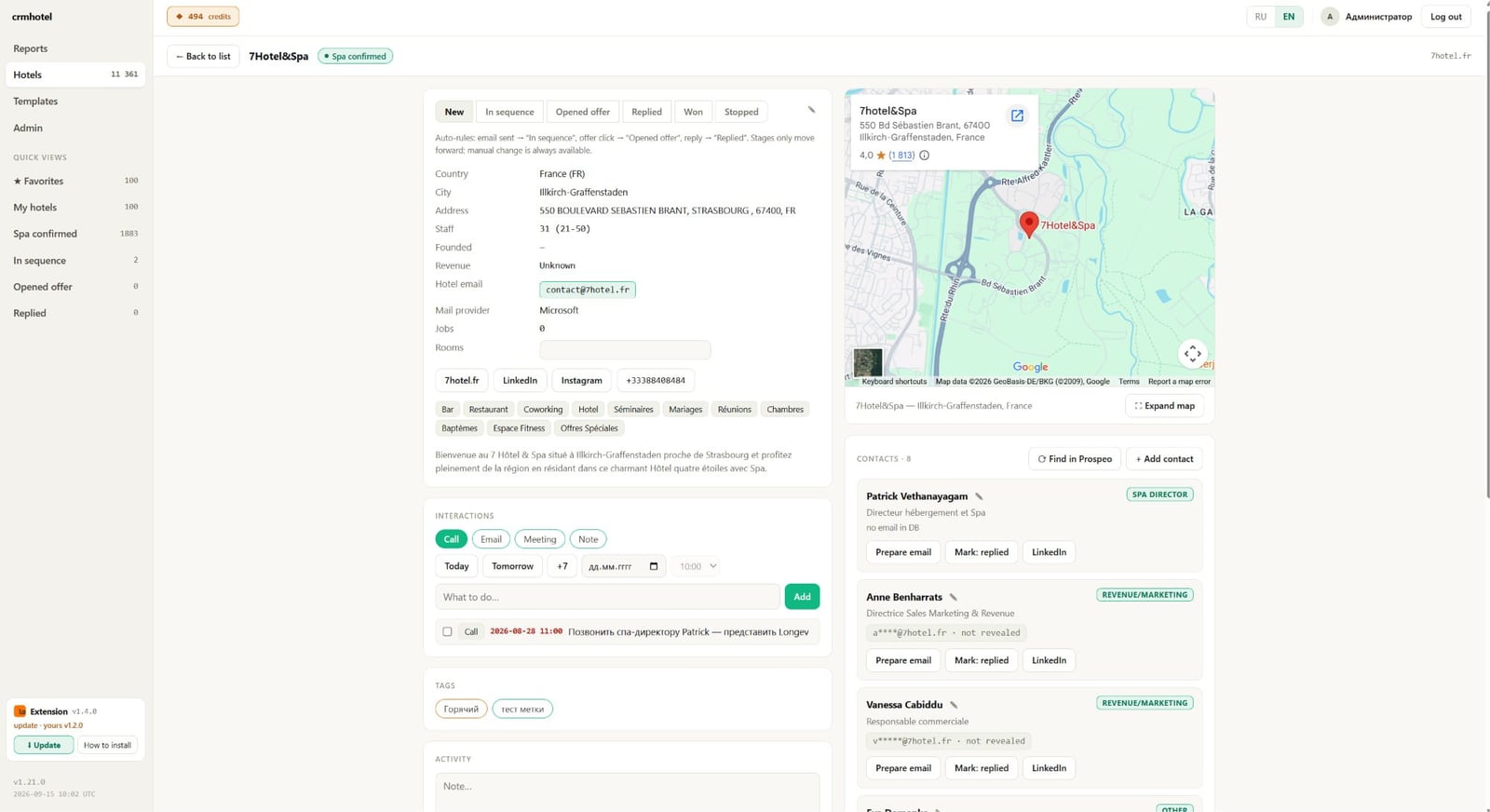
We were talking about a CRM system here, not a website, but the principle is the same: a ready-made template that doesn't fit your niche is often more expensive than a custom-built system. 1001site AI implements this logic for a website or online store—its AI agent builds it based on your link or description, eliminating months of development and agency accounts.
The question that changed architecture was: “Who exactly are we selling to?”
During every discussion of the CRM structure, the sales manager asked the same question: "Who exactly will we sell to?" The question was clearly addressed not to the developer, but to himself and the team. But it was this very question that oriented the system around a specific customer profile rather than abstract transaction tracking.
The developer primarily took into account the business owners' wishes—they were funding the project. But the sales manager persisted, and ultimately an additional task emerged: compiling a targeted database of direct contacts of decision makers with whom a deal could be made, instead of a general list of companies.
Why the "raw" database from ChatGPT and Claude didn't work
A one-time query to the language model produces a draft list without validation or selection criteria—insufficient for a working sales database. This is precisely what happened in this case.
One of the owners suggested the head of sales collect a client database using ChatGPT or Claude. He followed through with the task to the letter: he brought the completed download to the next meeting and immediately analyzed why it was useless. Working with raw data wastes the team's resources for verification and yields no results without additional processing.
The sales manager's position was straightforward: he was willing to work with a database, but not one obtained through a single request to a chatbot without any selection criteria. The project required specialized paid data sources and custom scoring criteria—a separate undertaking that a single free request couldn't replace.
How decision-making scoring was built for a niche
The client's sales manager developed the scoring and analysis criteria themselves. They are tailored to their niche profile, but the principle applies to any B2B business with a narrow customer segment:
- Define the ideal customer profile with a specific attribute, for example, “hotel with a spa area” instead of the general category “hotel”.
- Look for indirect profile indicators through open data: for example, job postings for spa specialists indicate that the hotel has a spa department.
- Check potential clients' websites for direct signs of a niche, such as the presence of a spa area and descriptions of services.
- Collect decision makers' contacts from specialized paid data sources - open directories alone are not enough for this.
- Store contacts and interaction history in your CRM along with deals so your sales team doesn't have to search for them separately.
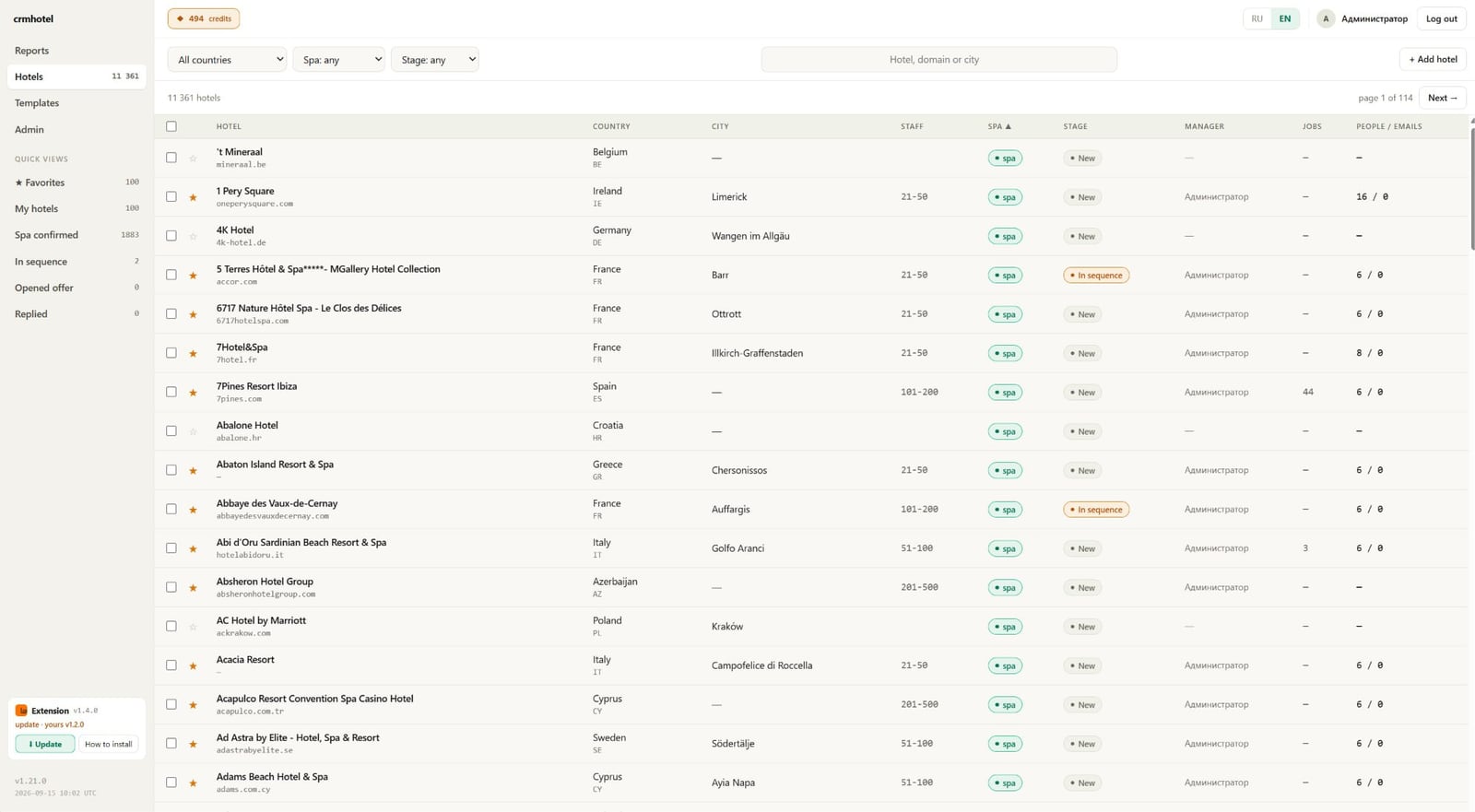
This resulted in a targeted sample with direct contacts from decision makers, which, in conjunction with the CRM, became a working sales tool.
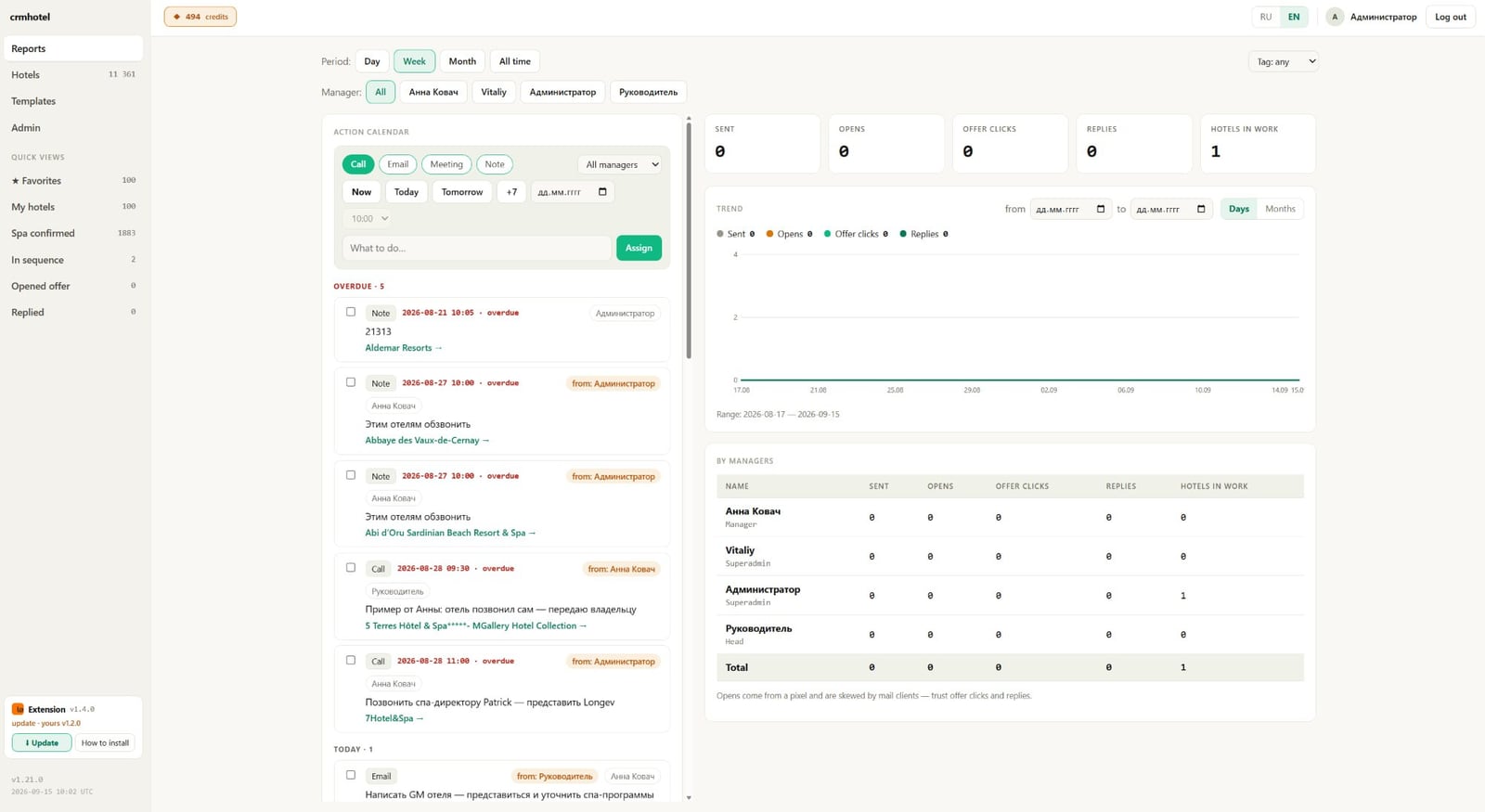
What did the business get in the end?
The sales department stopped wasting its resources on random companies and received a clear answer to its own question, "Who exactly are we selling to?" – a customer profile with direct contact information for decision-makers within the CRM, without the need for a separate database search. The fee is a one-time development fee, with no monthly subscription for using the service.
Who is this approach suitable for?
Developing your own CRM with a decision-making database isn't always practical. It makes sense if your business:
- sells to a narrow B2B niche with a clear customer profile (like banchem.sk - to spa centers and hotels with spas);
- ready to formulate criteria for scoring your audience instead of relying on a general list of companies;
- I've already encountered the fact that ready-made CRMs charge money for features that no one uses.
For mass B2C sales or simple order acceptance, a website with an application form and a messaging channel is usually sufficient; a dedicated CRM solution is unnecessary. A similar "custom-tailored system instead of a standard service" logic is evident in the accounting case study for the online store lpkelektro.cz.
The case study's author showcased the system from the inside in a video review—dissecting CRM with a decision-making database and why, without such a database and automation, CRM remains useless.
Questions and Answers
Where does the CRM get its database of decision-makers' contacts, not just a list of companies? A list of companies alone is useless—it needs niche-specific scoring. The client's sales manager defined the criteria: hotels with a spa are suitable, others are not. The spa is searched for on the company's website and through the spa specialist job openings the hotel posts. This filter is used to compile a targeted database of direct contacts.
Why not simply build such a database using ChatGPT or Claude? A quick query to a ready-made model yields a list from open sources without verification or selection criteria. A viable option is paid industry databases plus custom scoring criteria: a single phrase in an AI chat is not enough.
Is a custom CRM more expensive than a ready-made subscription service? It's a one-time cost during the development phase, but there's no monthly fee and no modules that no one uses. Recurring payments and unnecessary functionality were the reasons for rejecting ready-made solutions in this case.
Is this approach suitable for every small business? No – it's justified in a narrow B2B niche with a clear customer profile, and when ready-made CRMs force customers to pay for unnecessary features. For mass B2C or simple order-taking, a website with an application form and messaging options is usually sufficient.
Sources
- The author's post on Telegram channel "Business with AI | Through the Keyhole": https://t.me/promtvibeadd/447
- Client website: https://banchem.sk/
A similar logic works for websites: a system tailored to your niche instead of renting someone else's template. 1001site AI – an AI agent – builds a website or online store based on your link or description in minutes.
Project links
Discussion
Post and comments in Telegram channelБизнес с ИИ | Через замочную скважину · 21 September 2026
Questions and Answers
Where does the CRM get its database of decision-makers' contacts, and not just a list of companies?
A list of companies by itself is useless – niche-specific scoring is needed. In this case, the client's sales manager defined the criteria himself: hotels with a spa are suitable, while others are not (the spa is searched for on the company's website and through the spa specialist job openings the hotel posts). This filter is used to build a targeted database with direct contacts.
Why not simply collect such a database through ChatGPT or Claude?
A quick query to the existing model yields a list of open sources without verification or selection criteria—in the case study, this was called "a result tainted by AI prompts." A viable option is paid industry databases plus proprietary scoring criteria: a single phrase in an AI chat is not enough.
Is your own CRM more expensive than a ready-made subscription service?
It's a one-time cost during the development phase, but there are no monthly fees and no modules that no one uses. Recurring payments and unnecessary functionality were the reasons for rejecting ready-made solutions in this case.
Is this approach suitable for any small business?
No – it's justified when a business has a narrow B2B niche with a clear customer profile (like spas for a chemical manufacturer) and when ready-made CRMs force customers to pay for features they don't need. For mass B2C or simple order-taking, a website with an application form and messaging apps is usually sufficient, without the need for a separate CRM development.
Subscribe to my Telegram channel
In the channel « Бизнес с ИИ | Через замочную скважину», I watch and talk about how clients who have contacted me use AI in their businesses. I encourage discussion—let me know in the comments, and I'll respond directly.
Similar projects
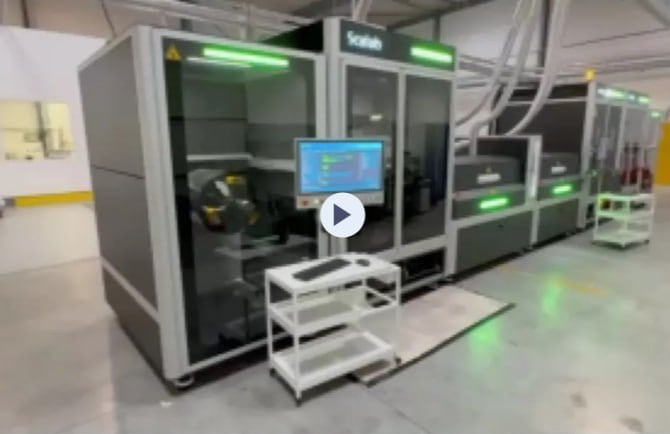
How to Preserve the Knowledge of Your Technicians: An AI-Based Equipment Repair Handbook
How I built a vector-based knowledge base for equipment repair and an AI-powered Telegram bot for a German factory: sources, operating principle, price, and who it's suitable for.
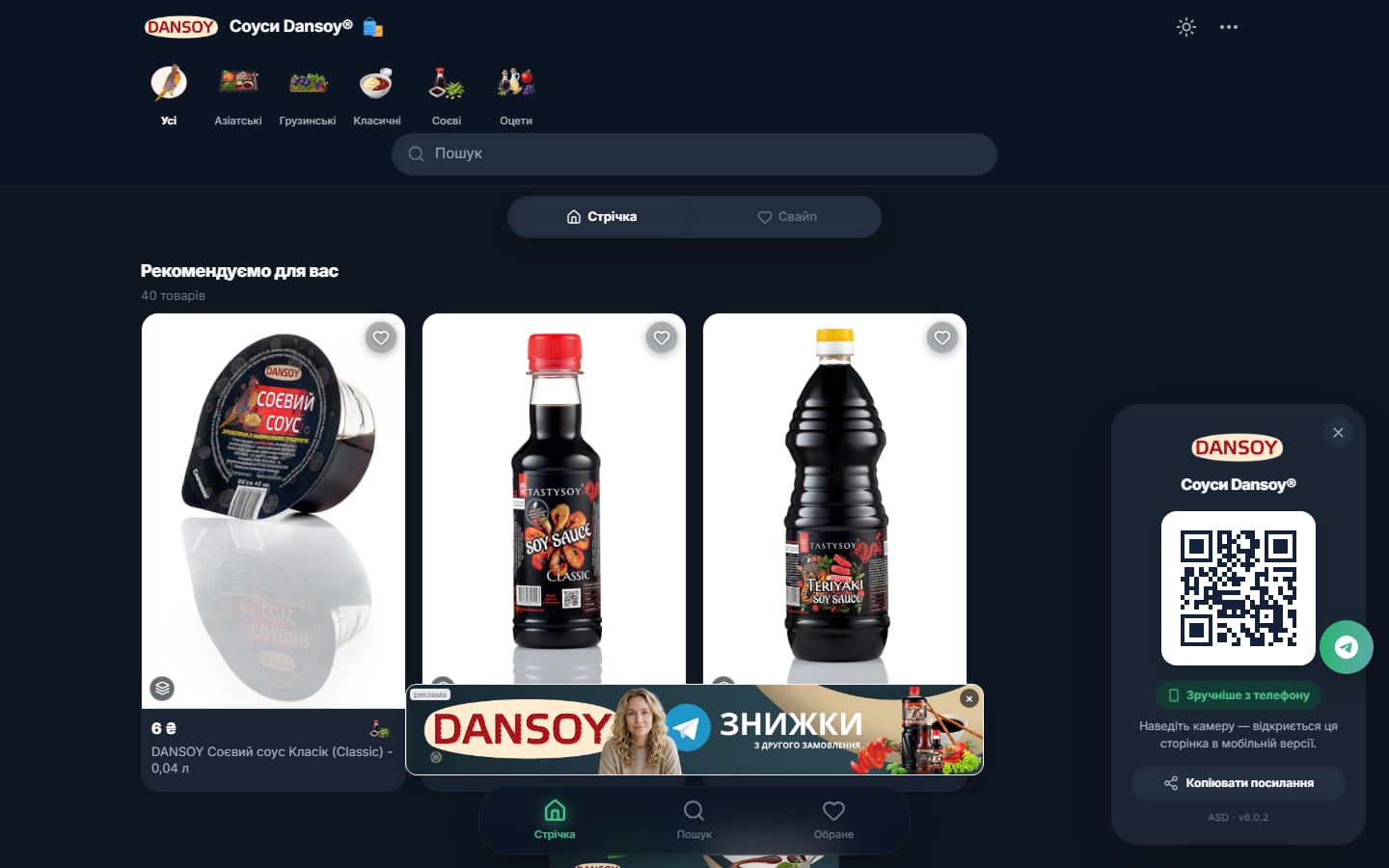
Anything can be produced, but selling it is a real battle: how a sauce manufacturer can get onto retail shelves using AI
The DANSOY TM experience: why the traditional path to retail is almost closed for a small sauce manufacturer, why buyers monitor Chinese TikTok and venture capital funds, and how AI helps find two viable paths to shelf space.
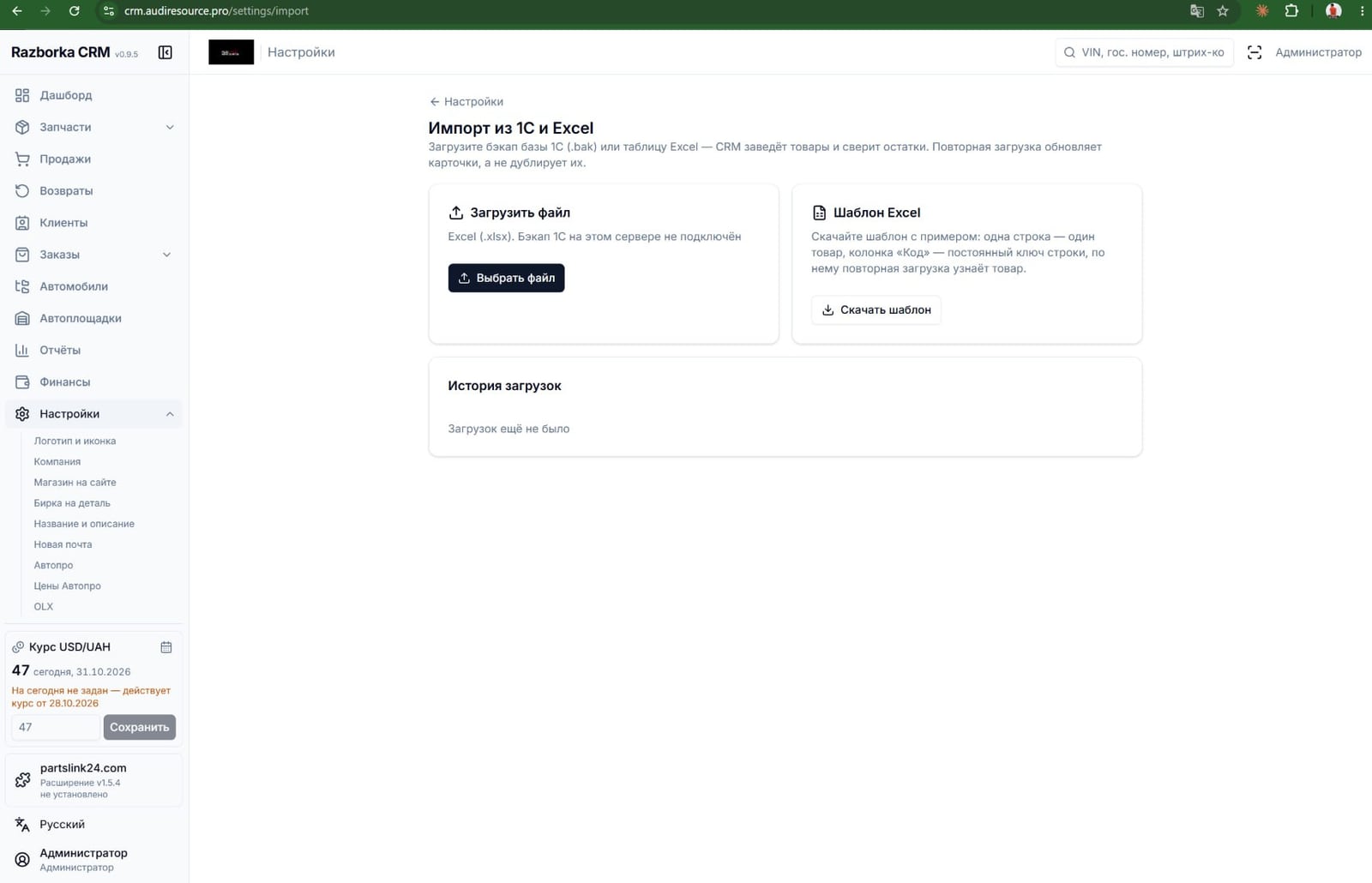
Import from 1C for auto dismantling: residuals and barcodes without duplicates
The fourth CRM case for Audi Resource: synchronization with 1C via GUID, balances without duplicates, barcodes and label printing, automatic publication on bulletin boards.