
A 300-Product Catalog in a Few Minutes: How MCP and Claude Fill an Online Store
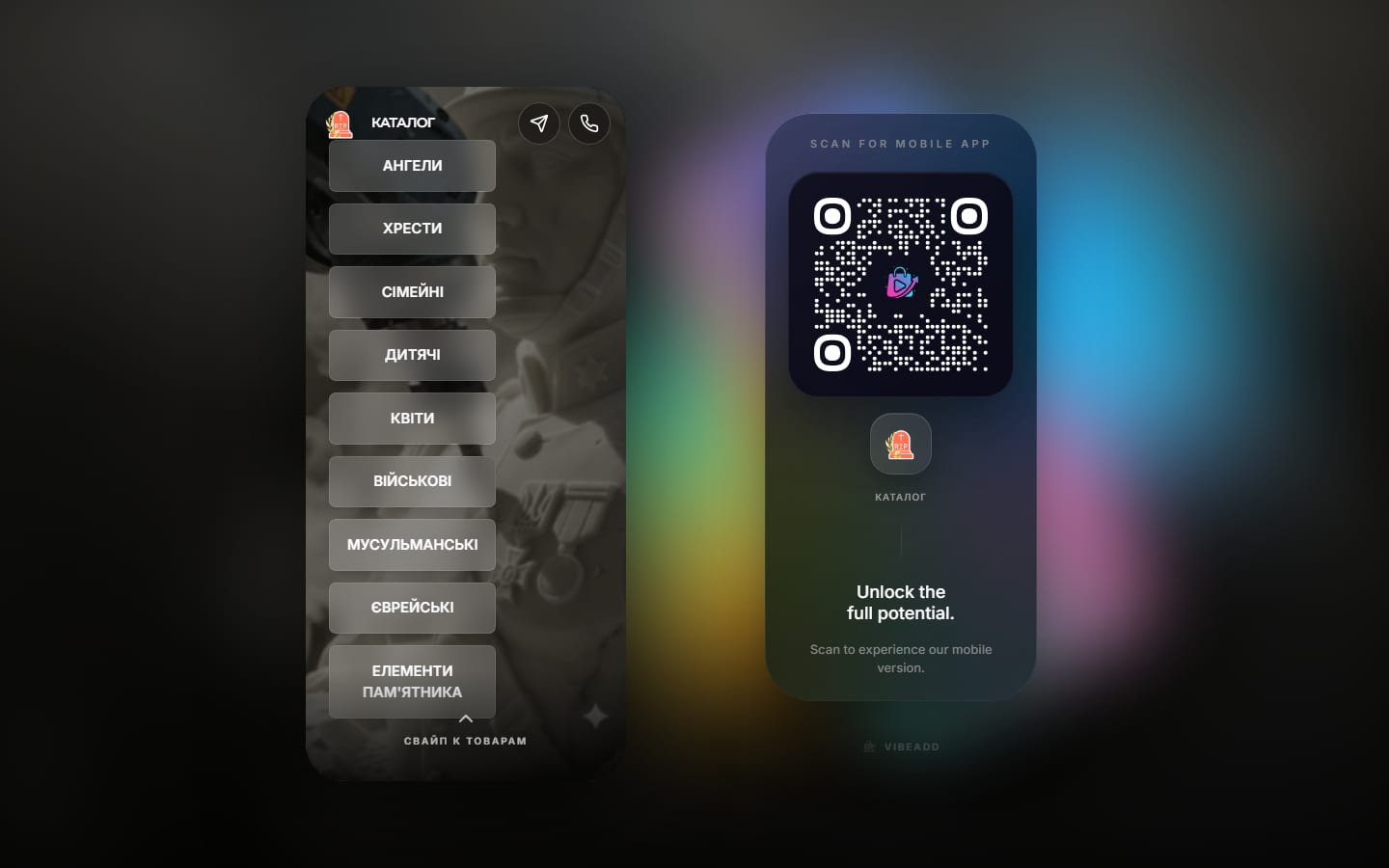
Right now, everyone urgently needs work and quick results. We received two simultaneous orders from the Ukrainian funeral services industry—different, but very interesting.
Project 1: Electronic catalog for dealers
The task is a working tool for partners and dealers in ordering monuments. The main requirements: speed and visual emphasis. In the words of the customer: “We need an electronic catalog for the work of our dealers and partners. This is not an advertising catalogue, but a working tool for a wide selection of models.”
Project 2: SEO Promotion
Promote the existing website pamyati.ukr (not developed by us). We'll start with a comprehensive SEO audit to determine growth opportunities and the final cost.
How AI compiled the catalog
Our video feed service, shop.vibevox.pro, was ideal for the catalog. Thanks to the built-in MCP (Model Context Protocol), the process is 95% automated:
- Setting the task. In just a couple of prompts, I explained to Claude what was needed (screenshots of the prompts are in the gallery).
- Parsing and content. Claude analyzed the array of source 3D models, sliced them into 300 individual products, categorized them, and packaged them into the service.
- Liven up the interface. To keep the homepage from looking boring, background videos have been generated for each category.
The result—shop.vibevox.pro/cnc—is awaiting approval from the customer. It turned out very well.
What does this change for e-commerce?
MCP technology radically changes store management. Instead of manually filling out product cards day after day, you communicate with a chatbot, send photos, and the system automatically fills the store. This is exactly how product import works at 1001site: a link to the old website or social media site, and the AI agent assembles the storefront.
Project screenshots
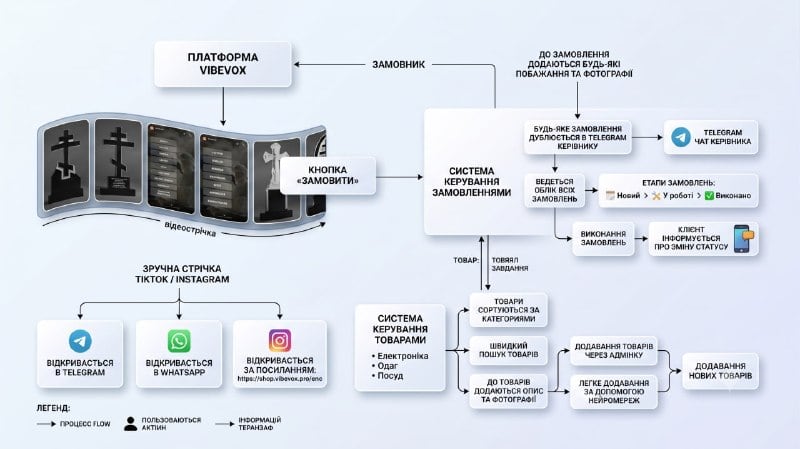
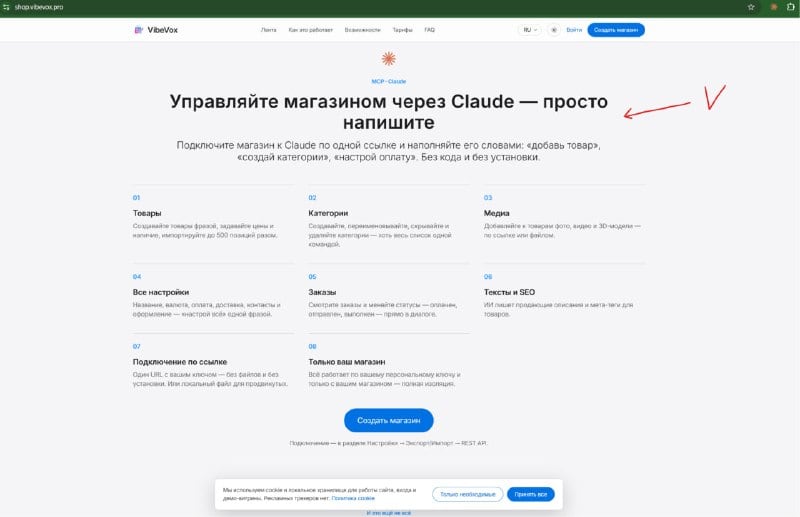
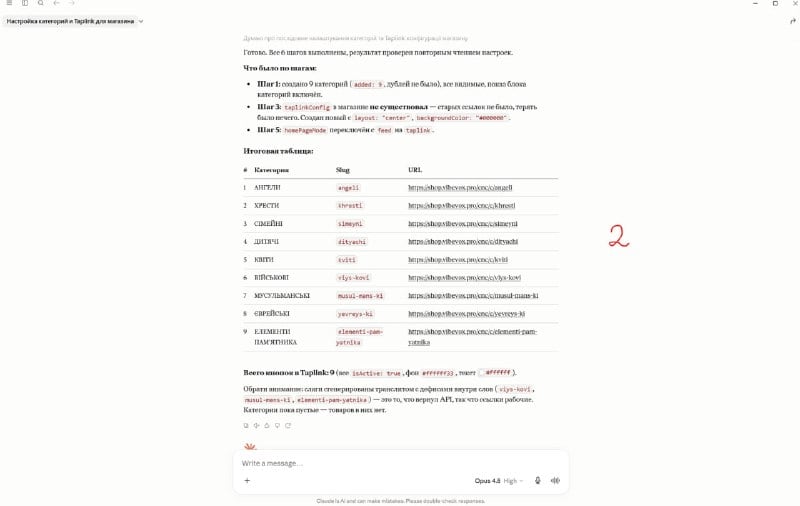
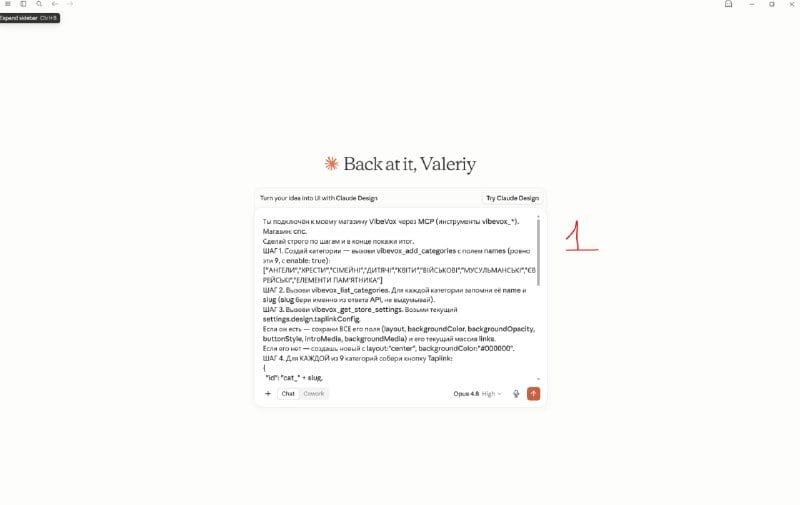
Post on Telegram channel
Questions and Answers
What is MCP and why does a store need it?
Model Context Protocol is a standard by which an AI model ( Claude, ChatGPT, Gemini) directly controls your service: it creates products, categories, and texts. You define the task verbally, and the system executes it.
How accurately does AI categorize products?
In this case, 300 positions were laid out automatically; manual editing was required for approximately 5% of the cards.
Is it possible to fill a store with products from photos or a price list?
Yes: a photo, a PDF price list, a table, or a link to an old website—the AI agent extracts names, characteristics, and prices and creates cards.
Subscribe to my Telegram channel
In the channel « Бизнес с ИИ | Через замочную скважину», I watch and talk about how clients who have contacted me use AI in their businesses. I encourage discussion—let me know in the comments, and I'll respond directly.
Similar projects
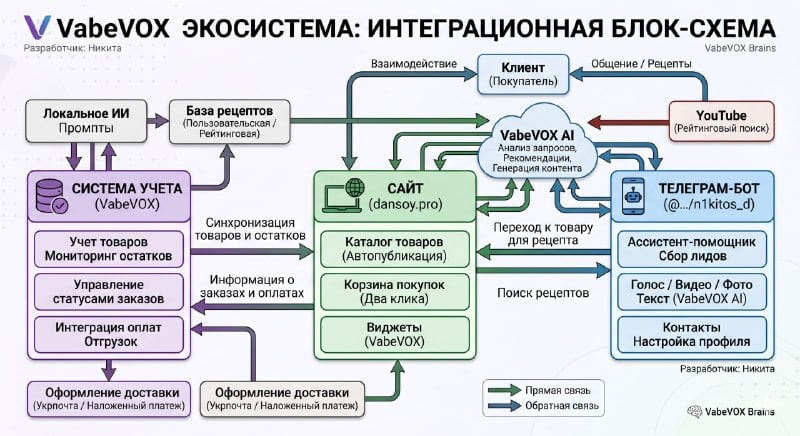
An AI-powered Telegram bot for an online sauce store: accounting, website, and an assistant that selects recipes and sells.
Case study: an accounting system + website + Telegram bot with local AI for the DANSOY sauce store. The bot selects recipes based on refrigerator photos, remembers family preferences, and sells products in two clicks.
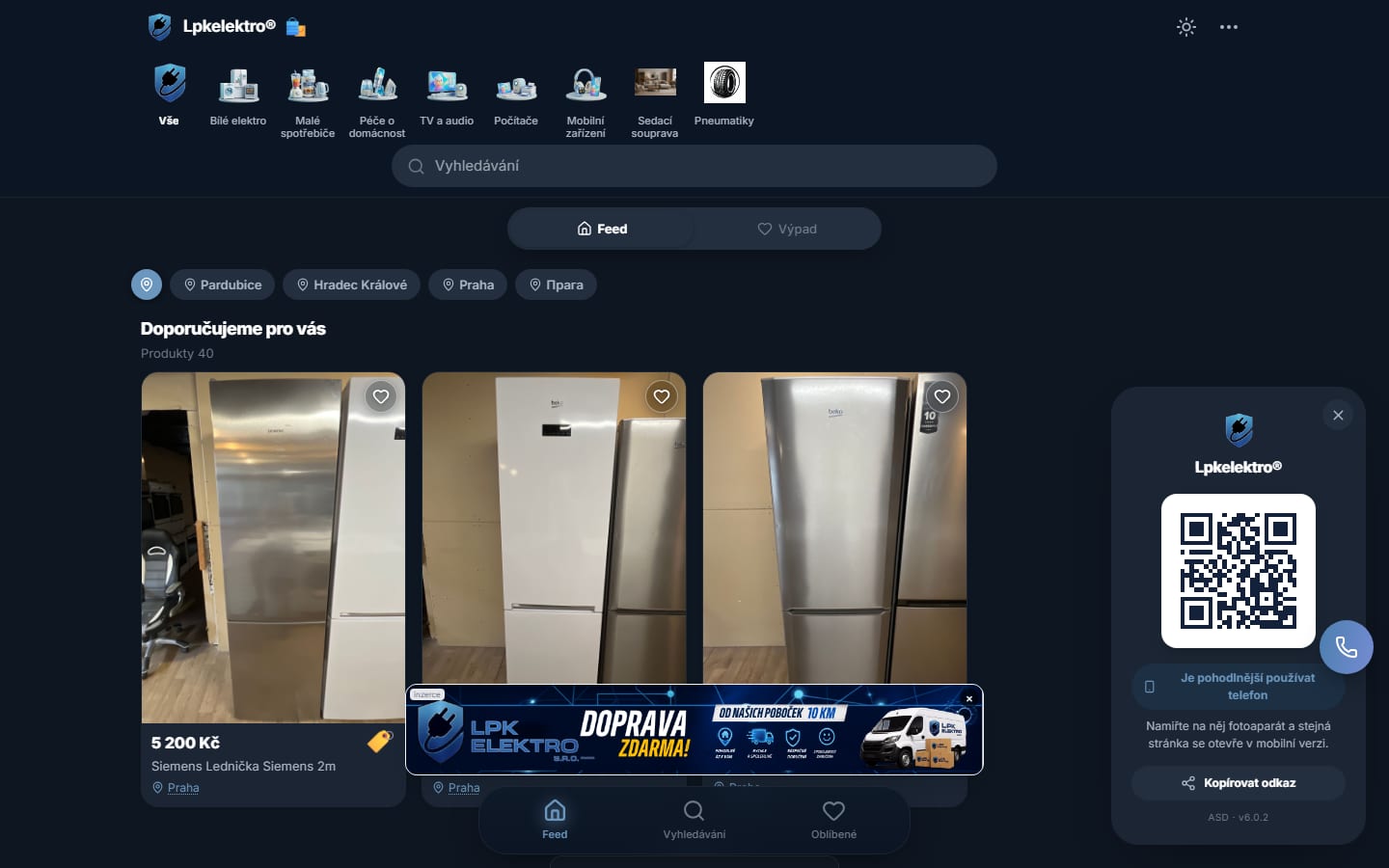
Accounting System with an Online Store in One Month: The lpkelektro.cz Case Study, Czech Republic
How to develop a system for selling returned equipment from scratch in 30 days and link it to an online store: specifications, warehouses throughout the Czech Republic, cash registers, scanners, analytics. Timeline and video analysis.
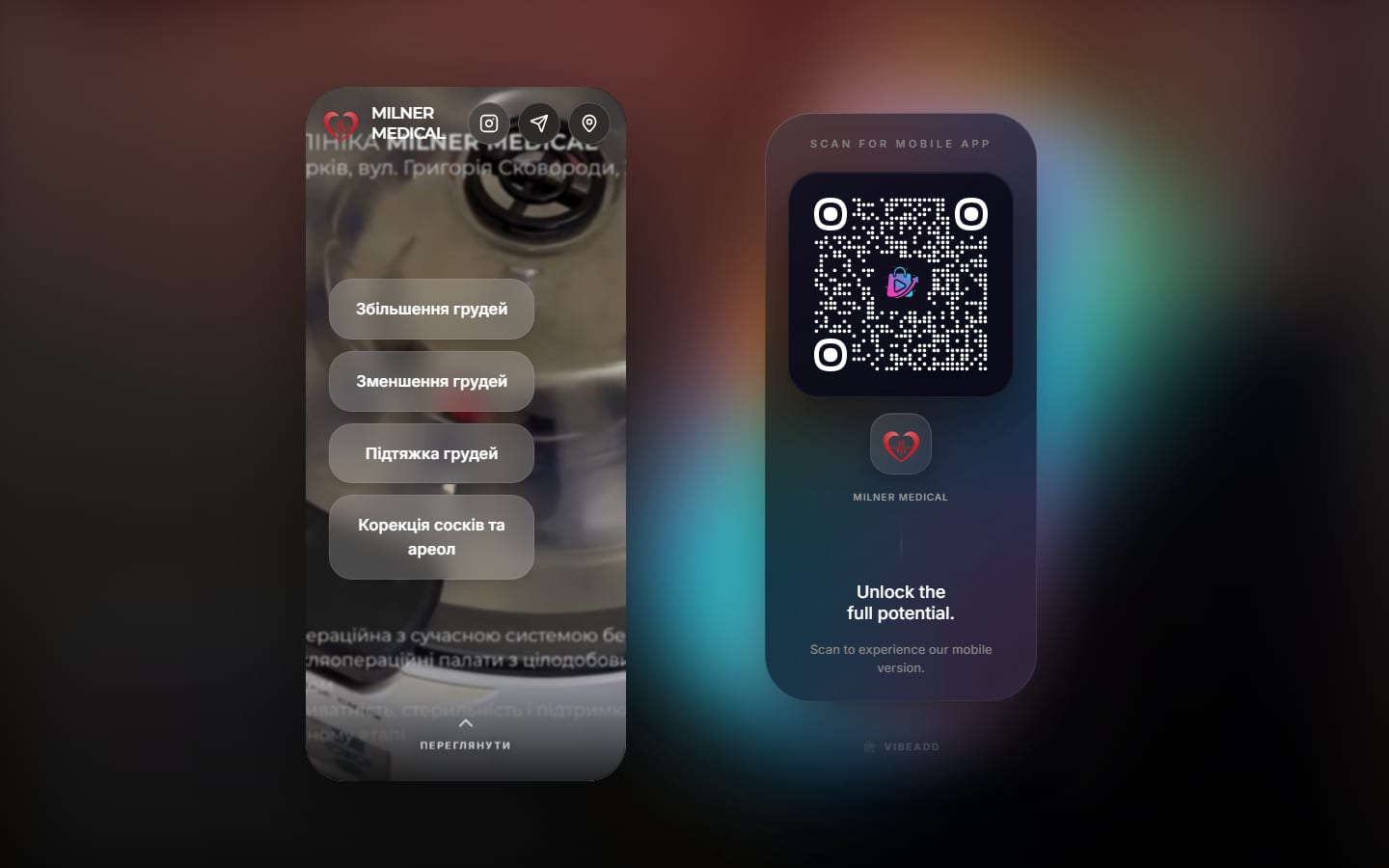
An AI-powered plastic surgery center website: video feed of cases, volume analyzer, and client acquisition via Telegram
Milner Medical case study: a video feed of work examples on their domain, a breast volume analyzer via the PerfectCorp API, and lead generation via the QuestFlow Telegram bot. 700+ interested visitors. Video analysis.