
Ctrl+Z Production: An AI-powered YouTube Video Studio Instead of Cheap Videos
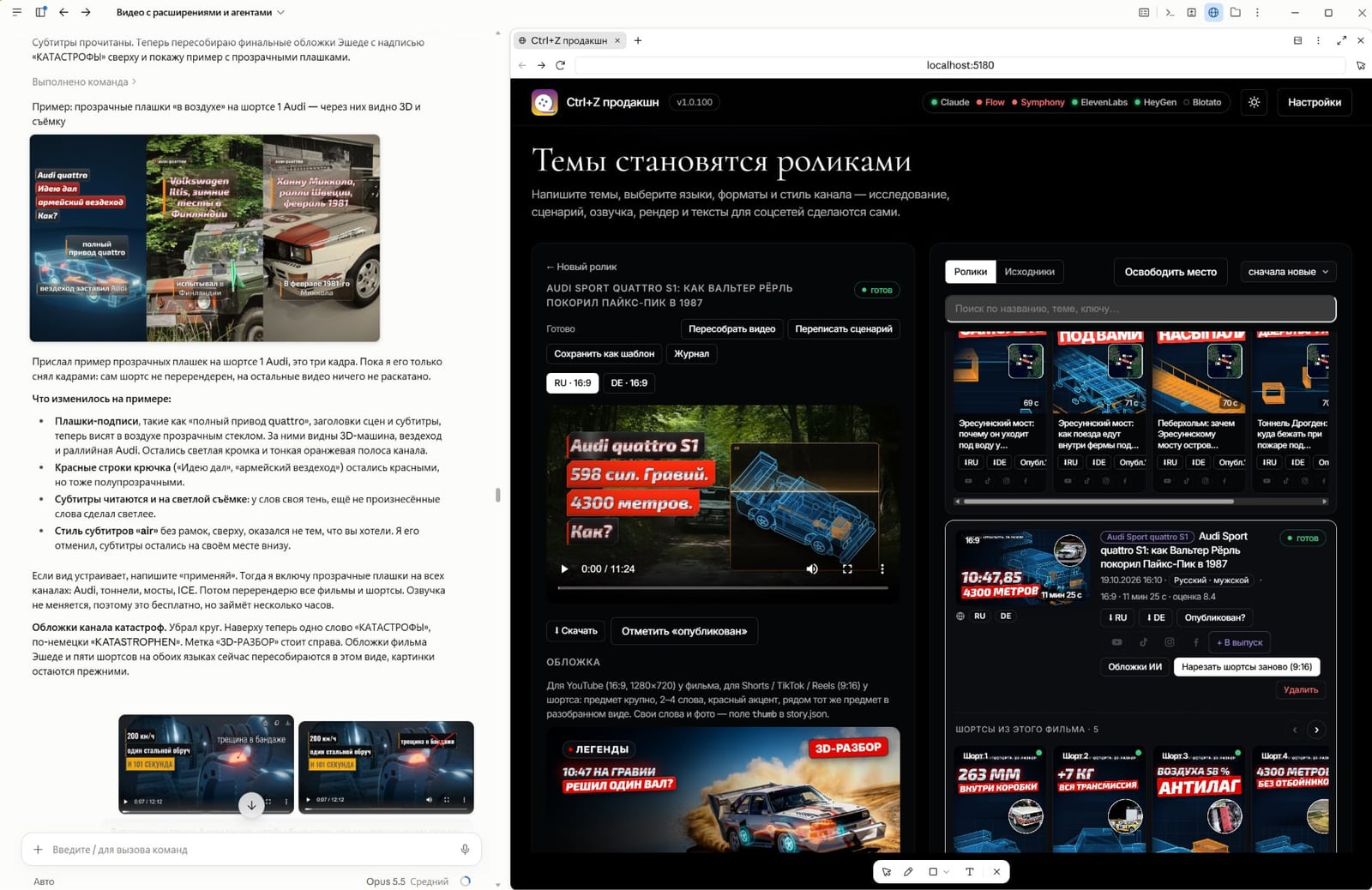
A documentary YouTube channel with over 400,000 subscribers built an AI-powered video studio. Topics and edits are submitted via plain text in a chat based on Claude. Then, a 3D animation generator, a blueprint and map generator, and an AI agent system that automatically checks the finished video take over. I'll explore its components and why it was needed now.
Why does a documentary channel with 400,000 subscribers need its own AI-powered video studio?
This isn't the first time Viktor has contacted us: we've previously created bulletin boards and Telegram channels for him. In 2023, he launched the All Tech YouTube channel in the "Popular Mechanics" genre—videos about manufacturing and technology—and grew it to over 400,000 subscribers, monetizing the channel through the Brazilian market. Since spring 2026, the channel has also been targeting a German audience: the same material is being remastered and dubbed into German.
The studio's first version simply automatically cut videos from licensed stock footage—cheap, but limited. In the spring and summer of 2026, it became clear that this wouldn't be enough: YouTube was developing an AI search engine that parses the video's content itself—frames, audio, and scripted content. A transition was needed from spliced footage to in-house 3D graphics, motion design, and clear explanations—all without inflating the production budget and controlled via plain text in chat.
How to control a video studio with just one phrase in chat?
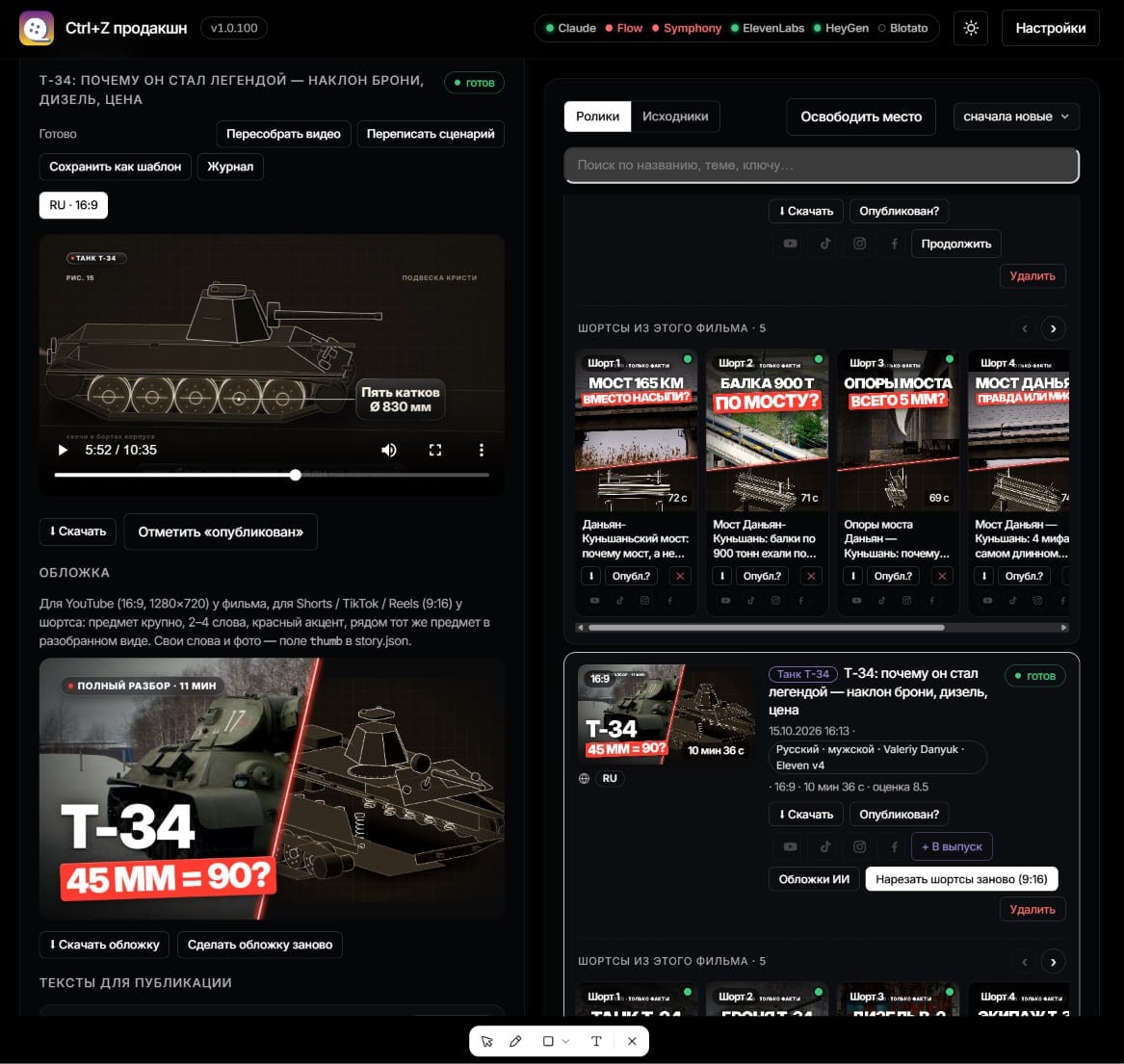
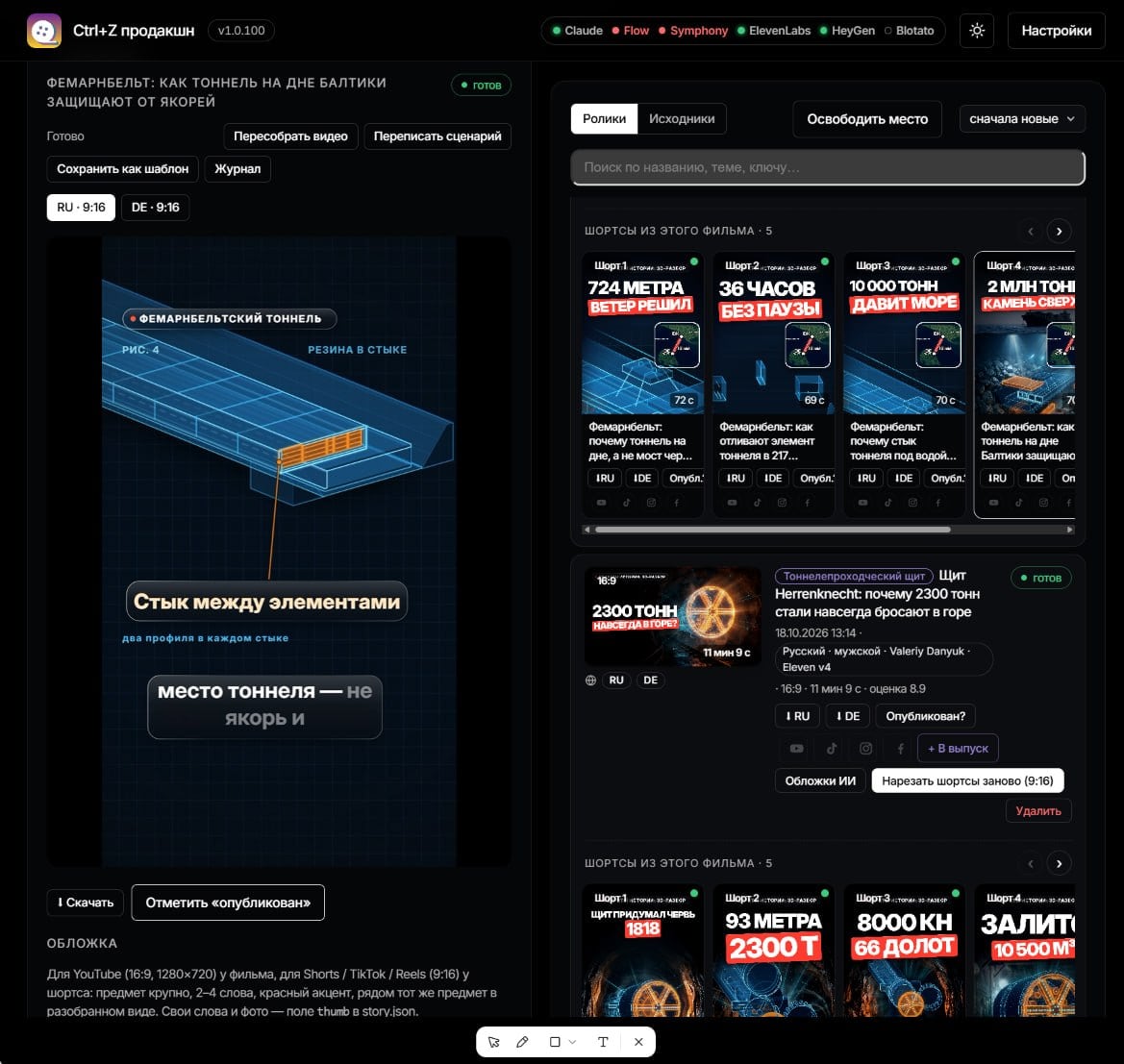
The entire studio operates through a dialogue powered by Claude: the creator writes the topic, selects the languages, format, and style of the channel, while the research, script, voiceover, rendering, and texts for social media publication are compiled automatically. It's the same principle as a voice assistant, only with edits tailored to specific frames of the video.
In practice, it looks like a regular correspondence. The author sends a screenshot or describes what's wrong with the current version—for example, that the captions on the cover are blocking a beautiful image—and receives a rebuilt version with clarification on exactly which elements have changed.
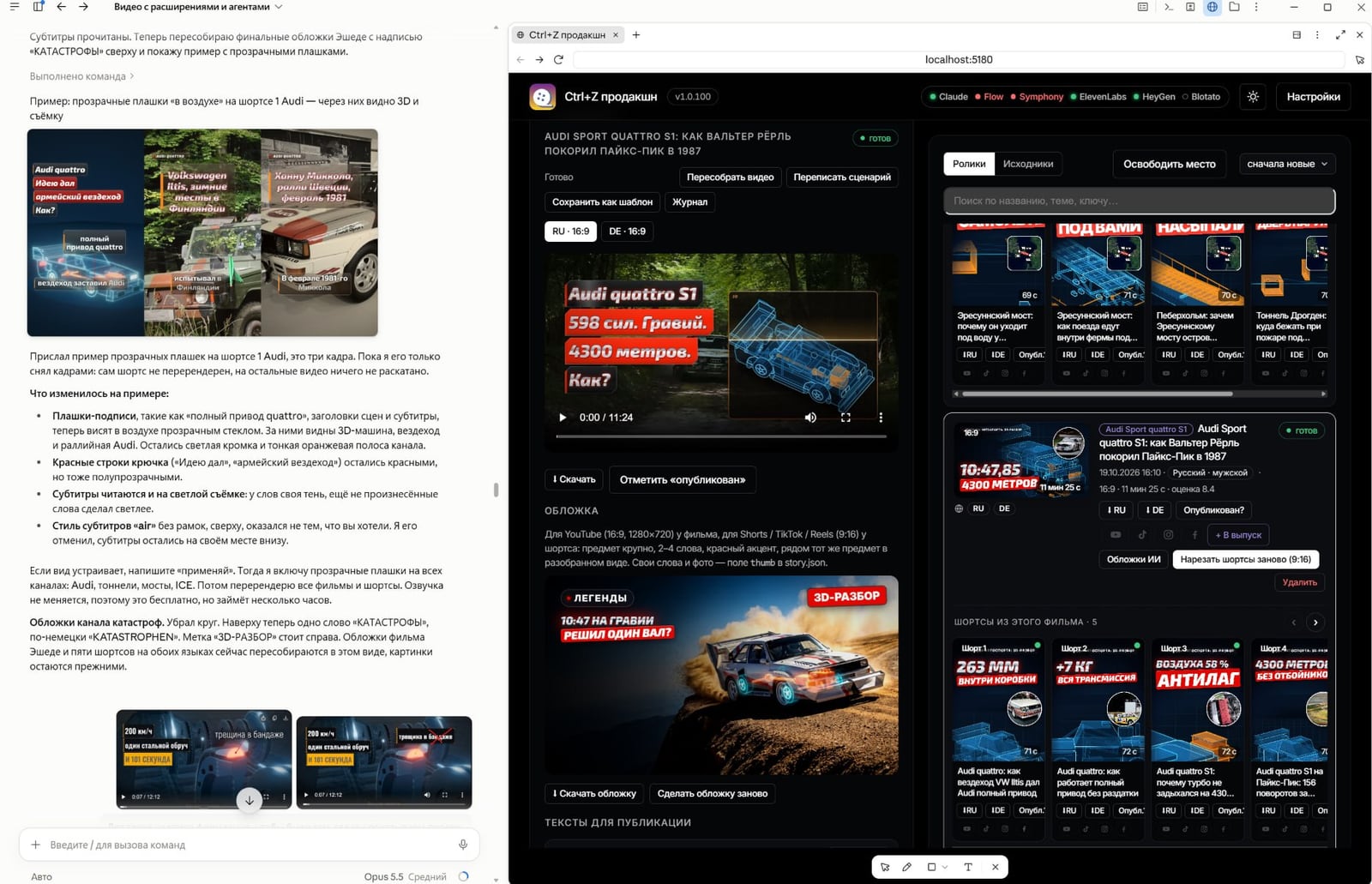
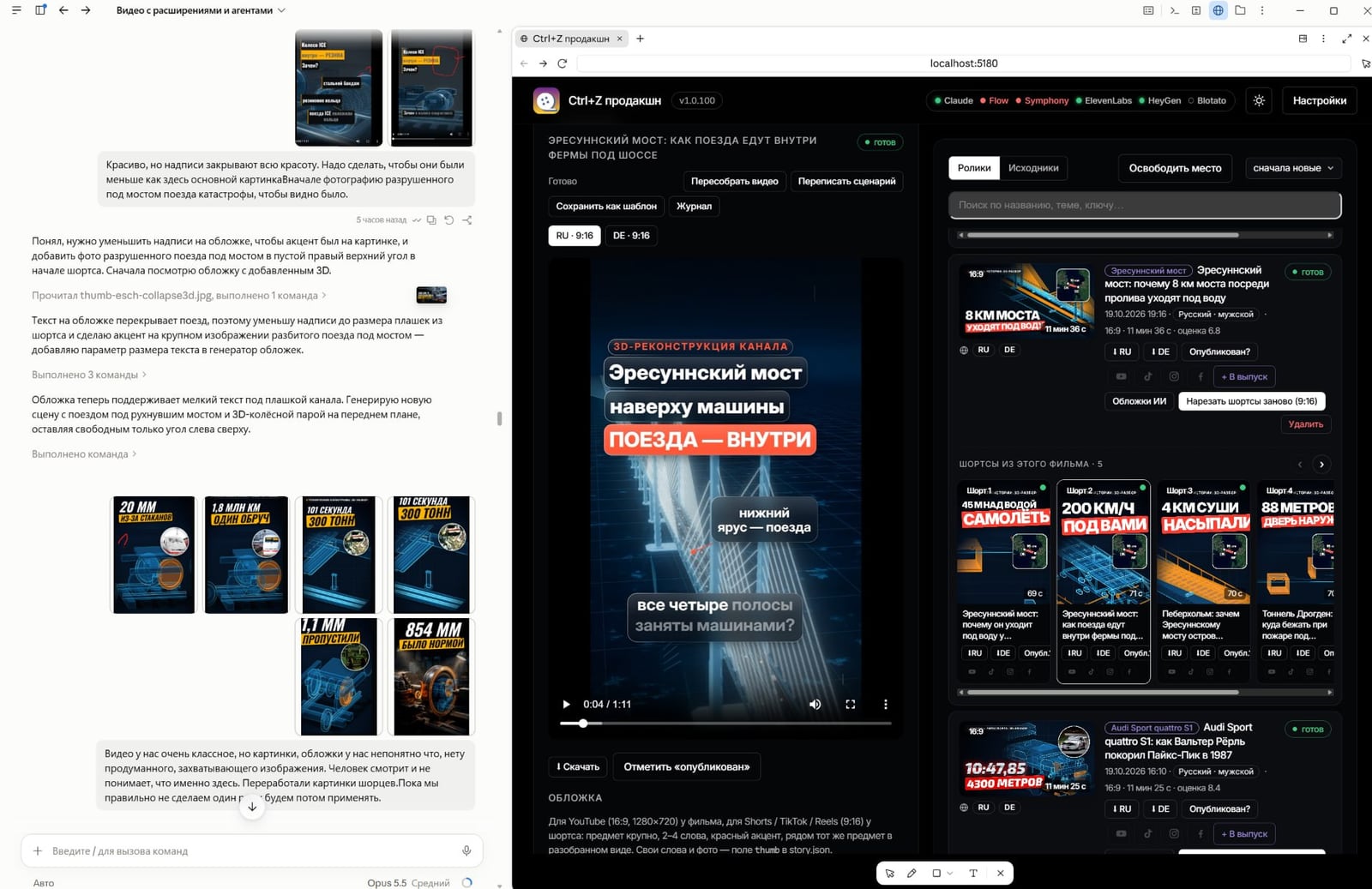
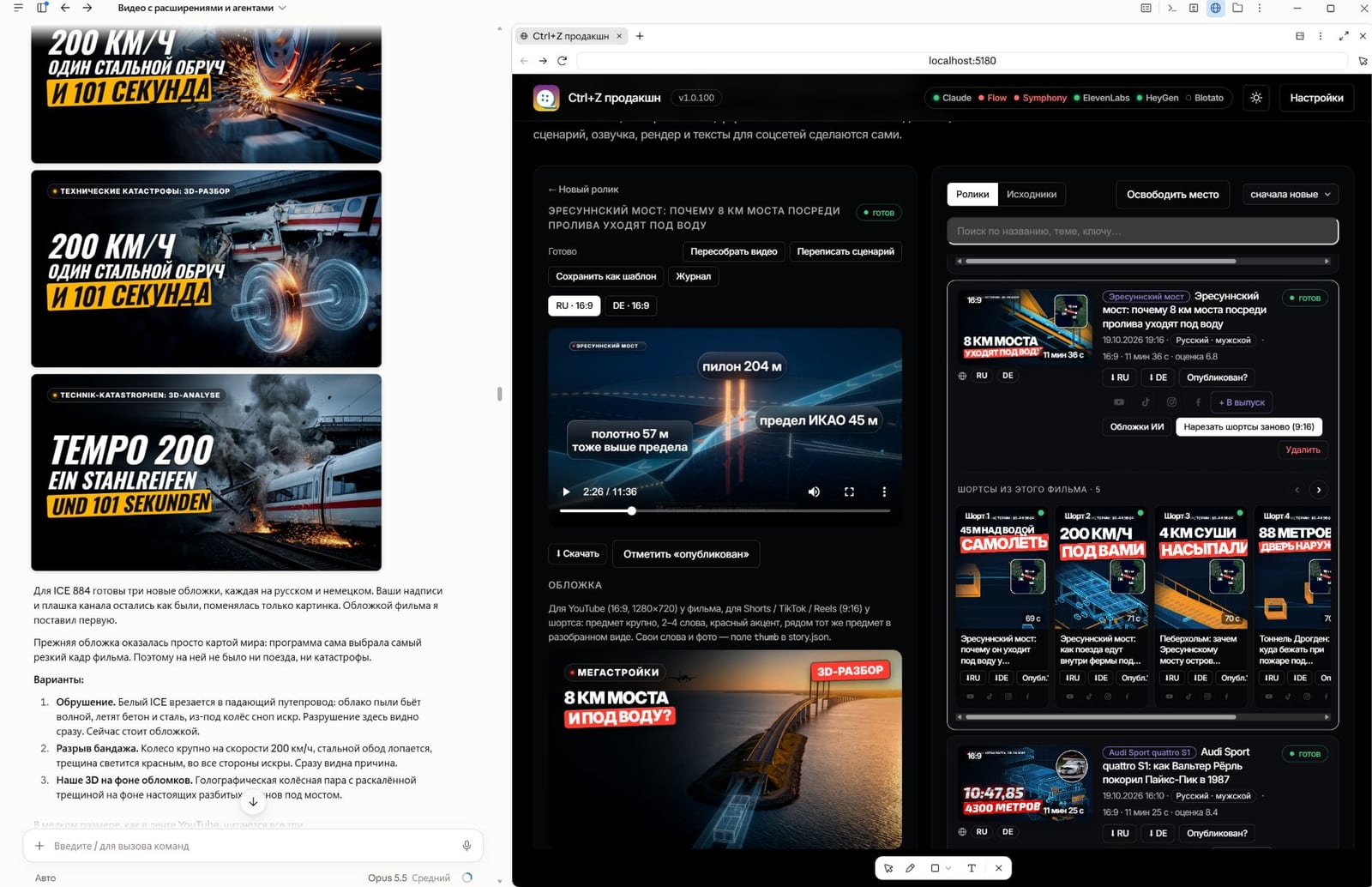
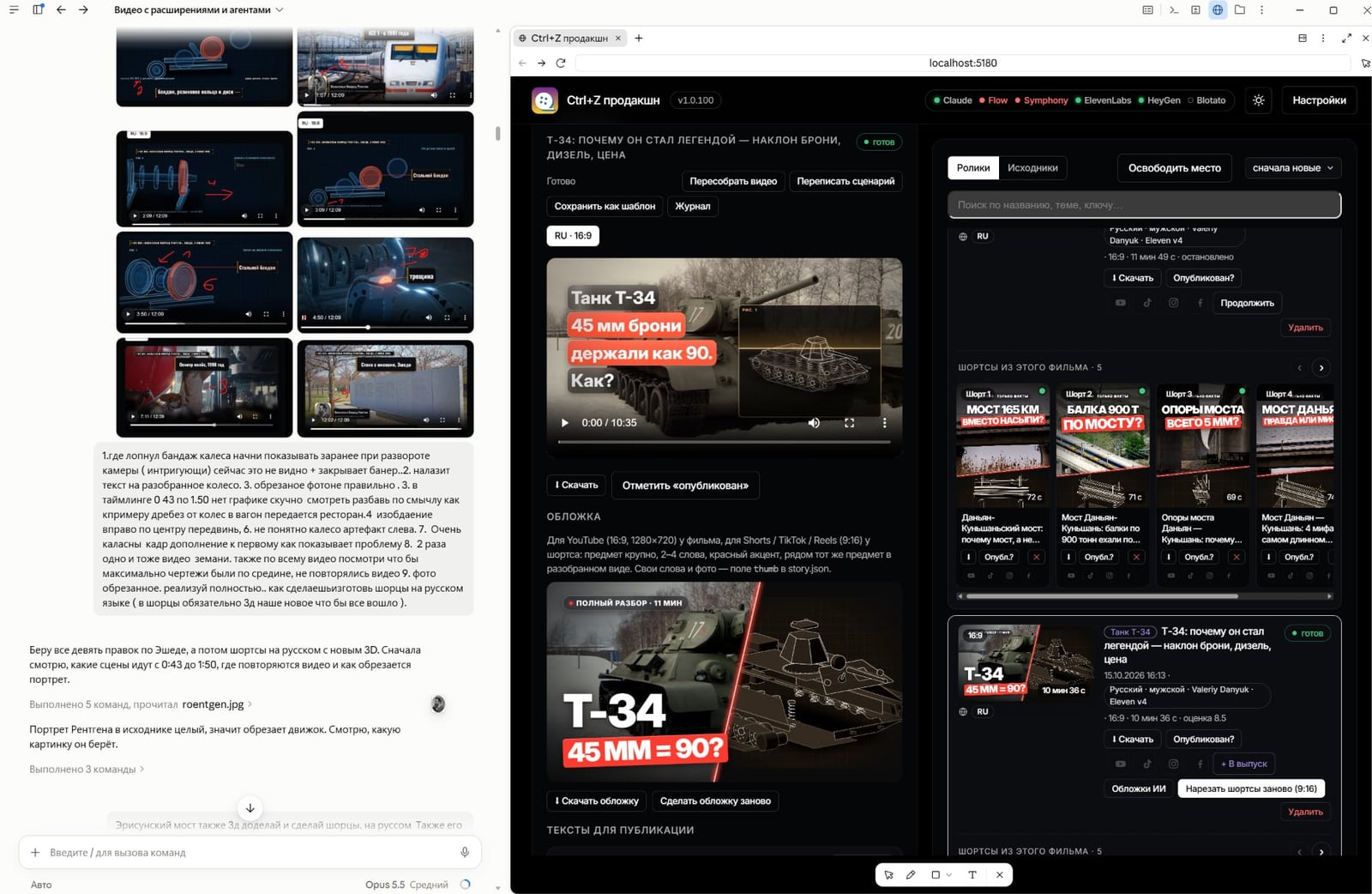
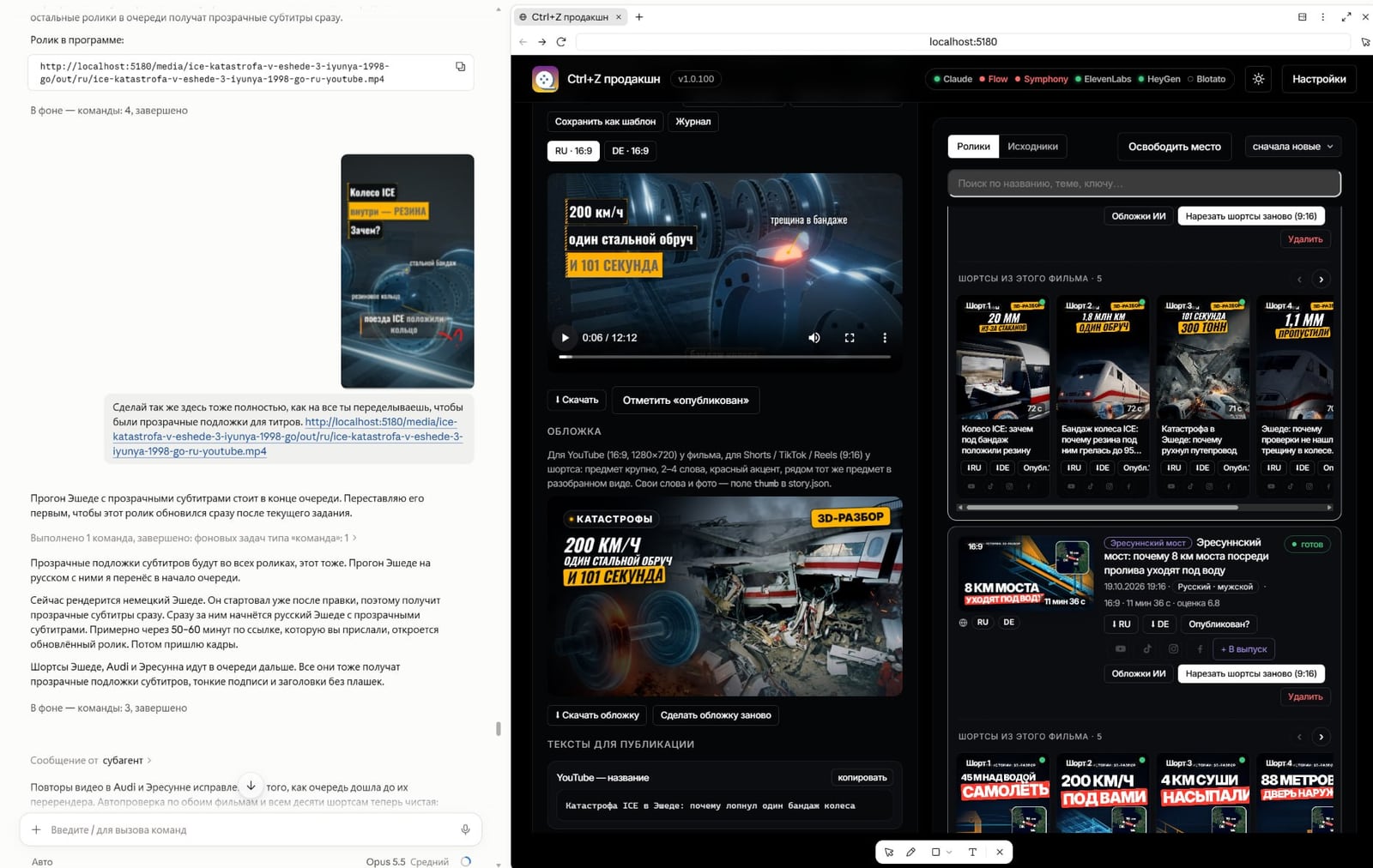
Each author's edit is made as a separate command and is applied to all related videos on the channel at once—no need to manually redo dozens of covers if the overall style of the banners changes.
Want to manage your website with just words, without any settings? 1001site AI works on the same principle: the personal AI assistant edits text, photos, and pages based on a text command or a screenshot.
What can a 3D animation generator do?
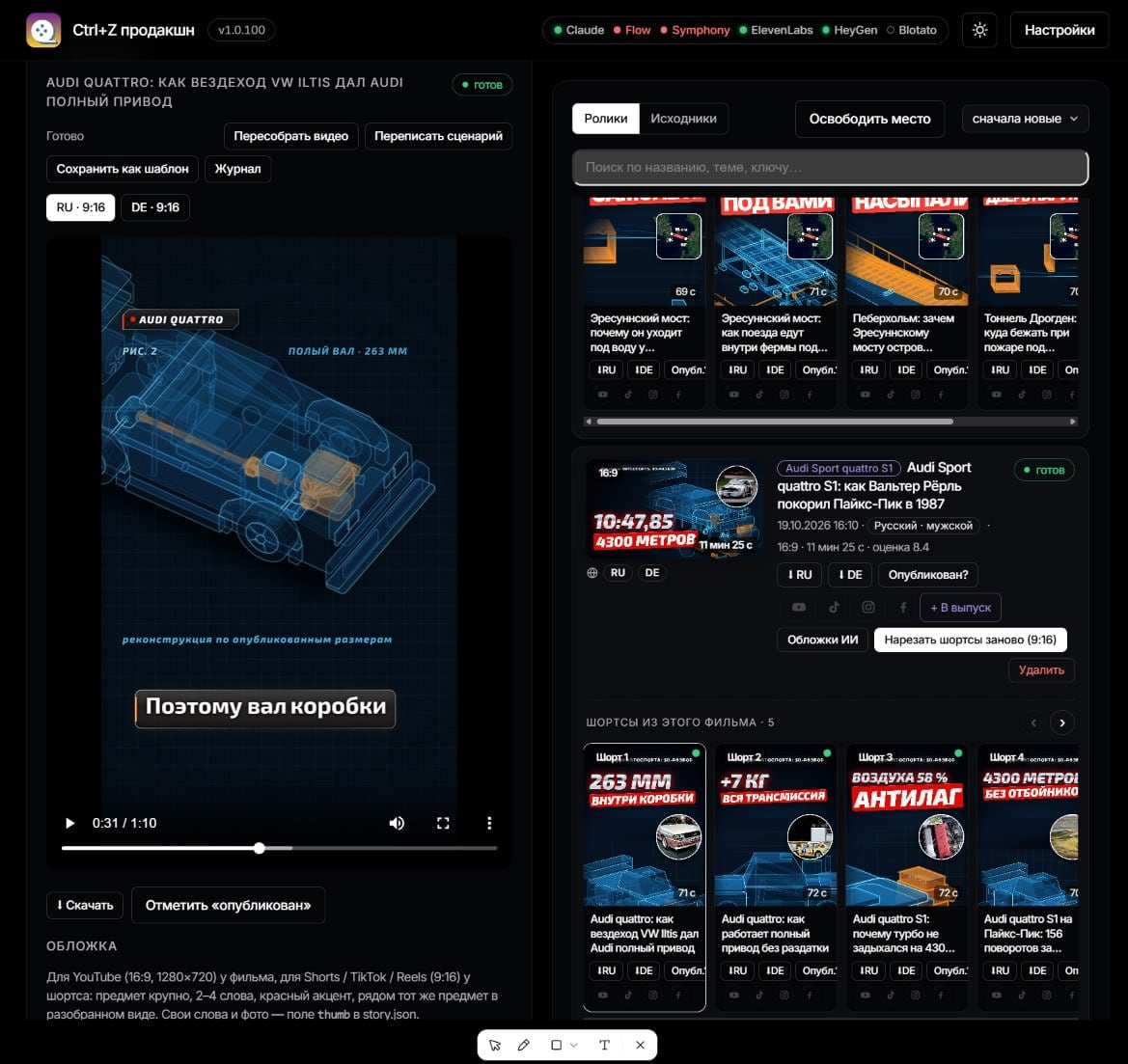
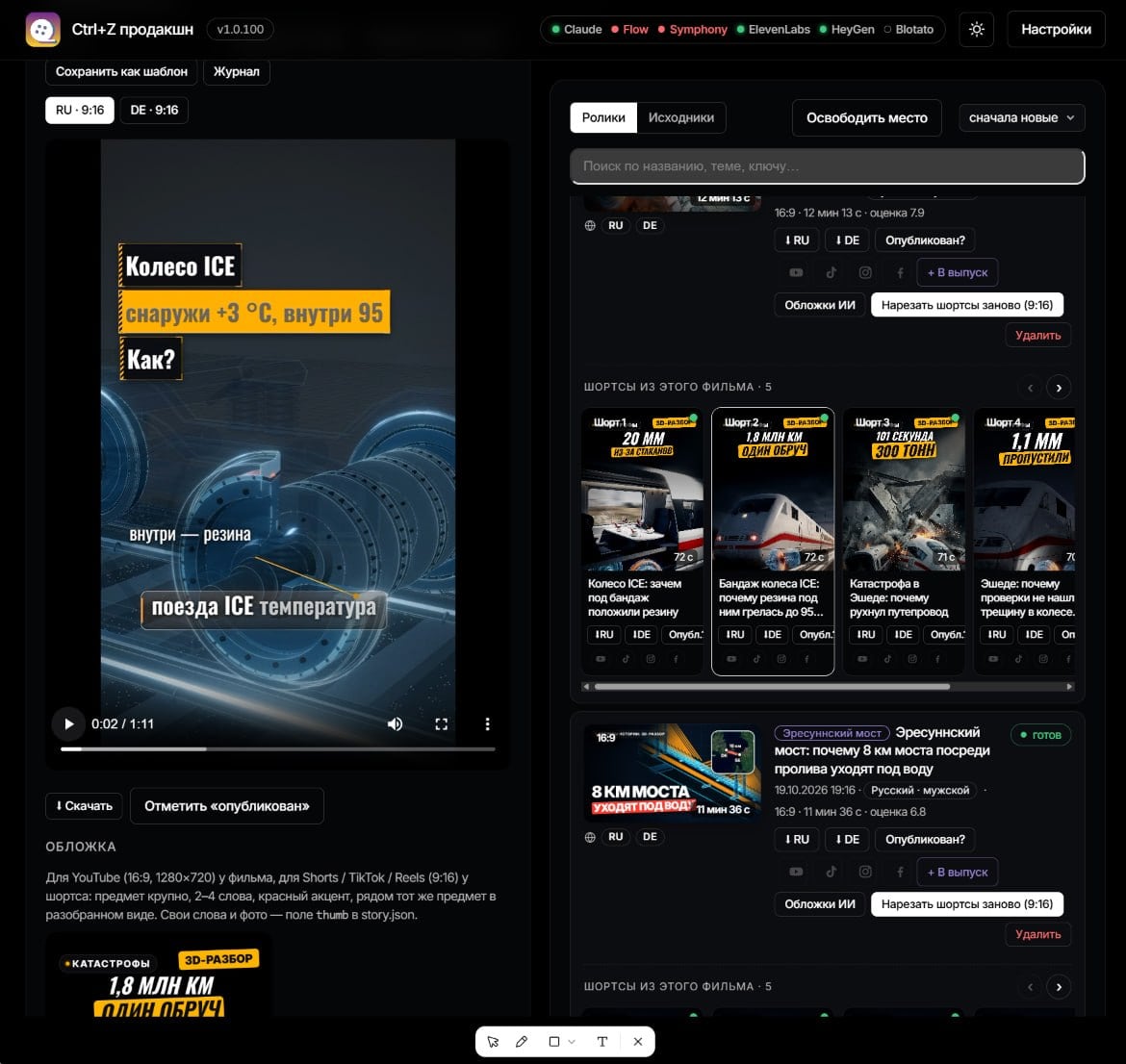
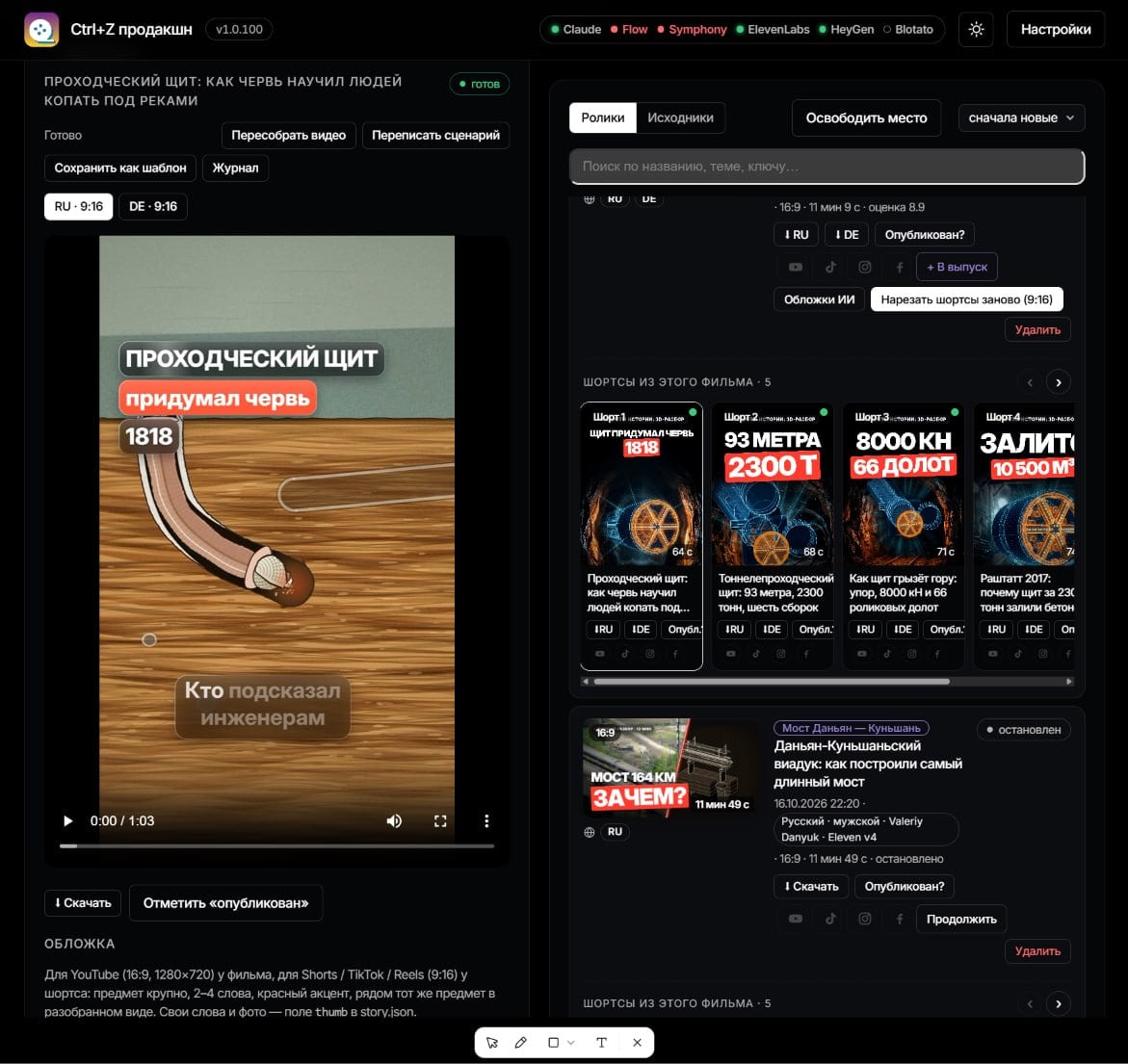
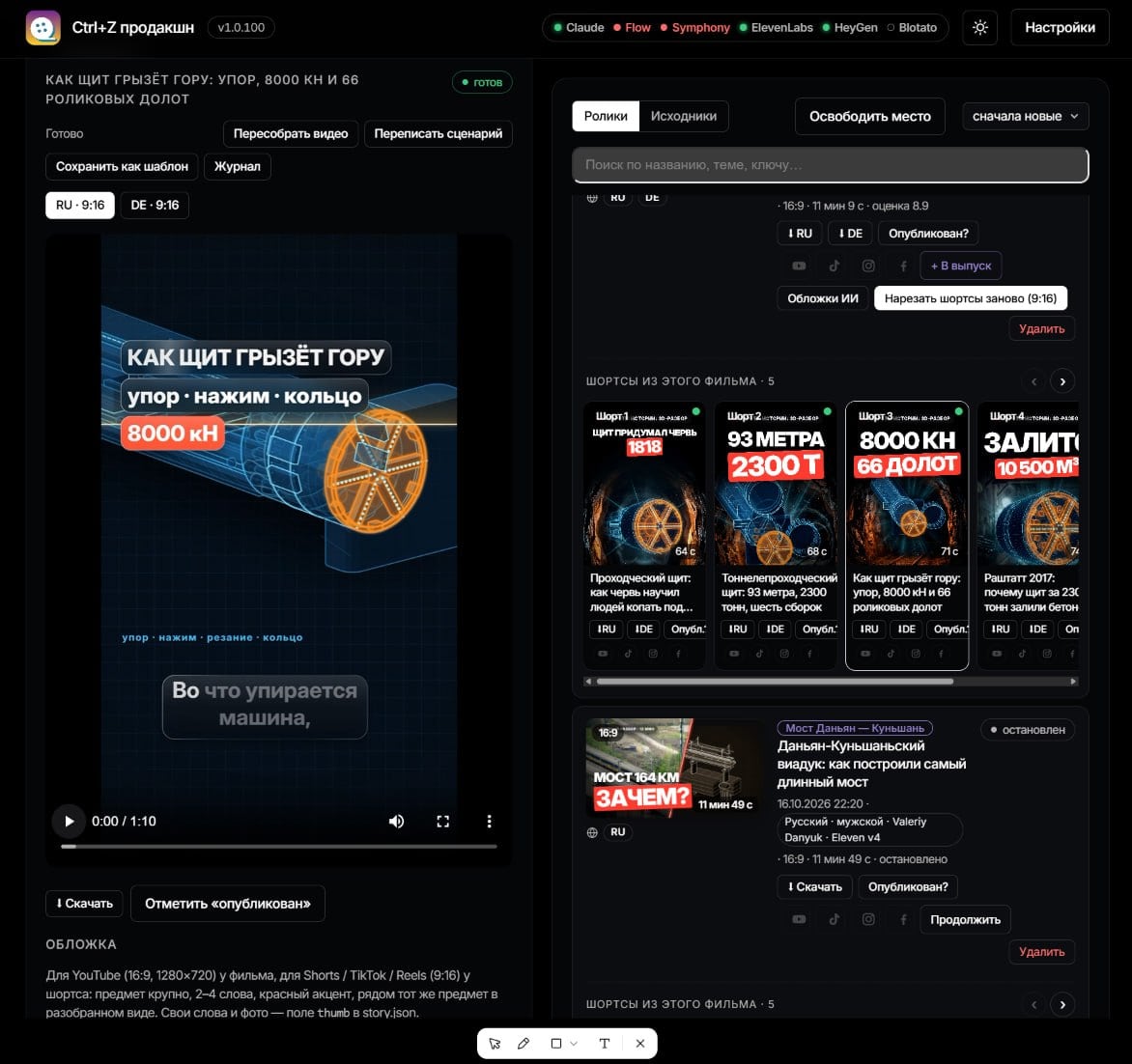
The generator creates a precise 3D reconstruction of a real object based on published dimensions—a gearbox shaft, a train wheel, a bridge pylon—and converts it into an X-ray layer over standard images. The model is engineering-precise, with annotated dimensions—it can be verified against the same drawings on which the generator was based.
The resulting images include scenes like a disassembled Audi quattro shaft labeled "hollow shaft 263 mm" or a cross-section of an ICE train wheel with a temperature map showing "outside +3°C, inside 95°C." Some objects are impossible to capture at all—a hidden crack in a steel tire at 200 km/h or the very moment an 8-kilometer bridge in the middle of the strait submerges into a tunnel. Here, a 3D reconstruction based on blueprints shows the scene more clearly than archival footage and without licensing issues.
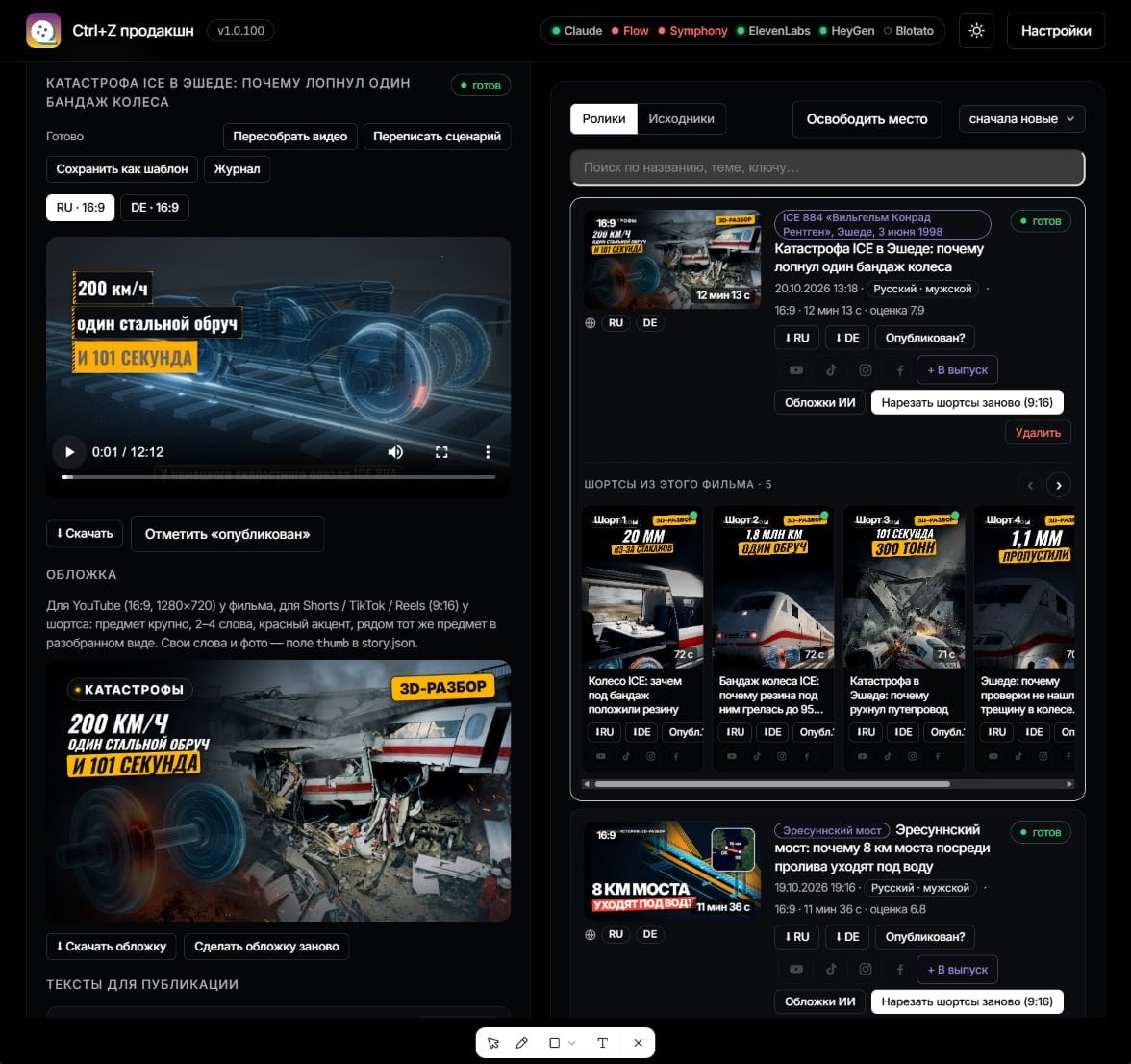
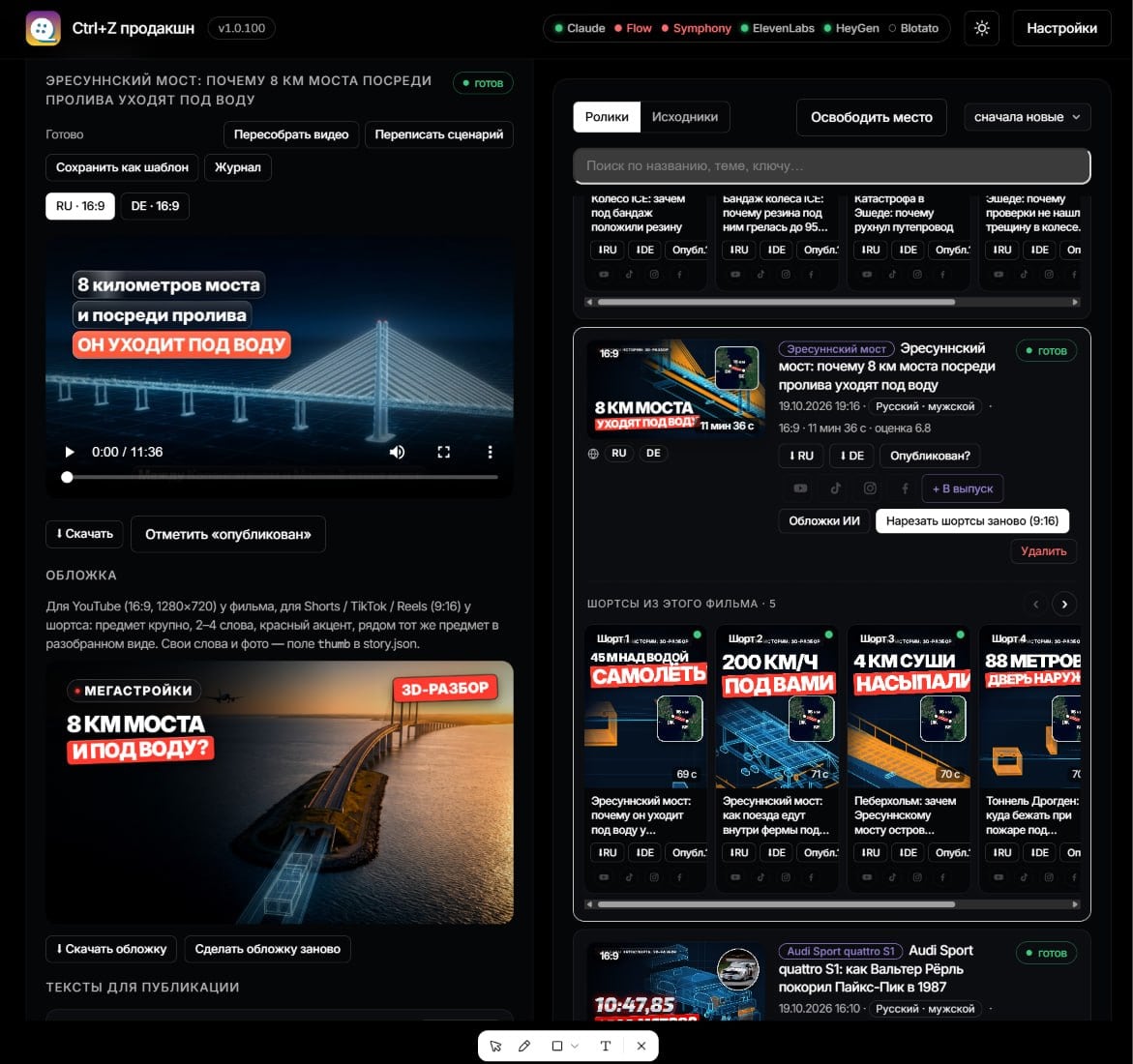
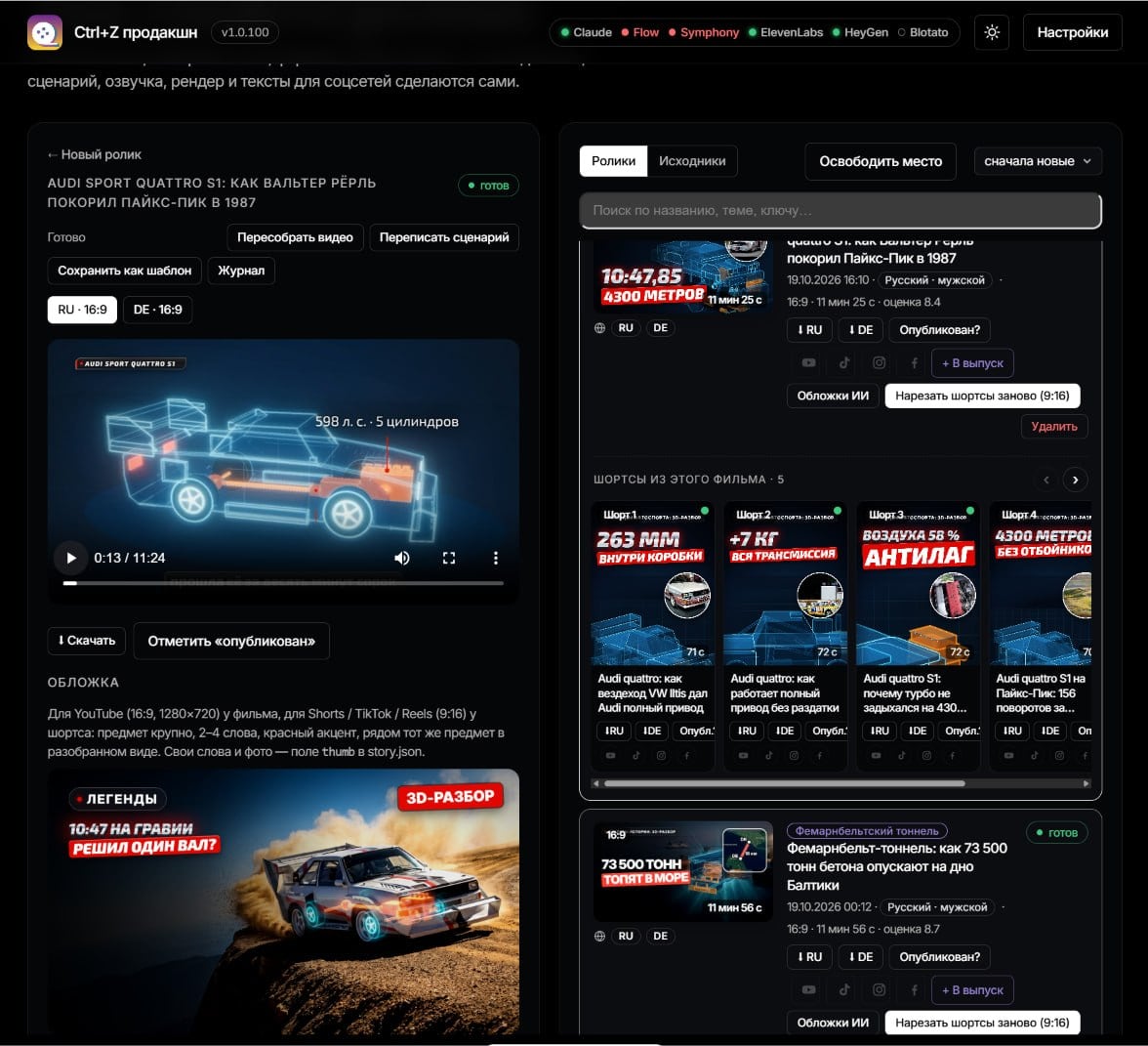
Where do the drawings, maps and 2D animation come from?
The second generator covers tasks that don't require full 3D: flat technical illustrations in a historical style, cross-sectional engineering diagrams, and terrain maps with routes. The same tool can draw a diagram of the bicycle chain on the Wright brothers' first airplane and a satellite map of a 164-kilometer-long bridge.
The style is chosen to match the story: for historical episodes, sepia-toned linear graphics reminiscent of drawings from old patents; for engineering explanations, a flat diagram with labeled parts; for geography, a map of the area with marked routes between cities. Thus, a single video can switch between three visual languages without losing coherence.
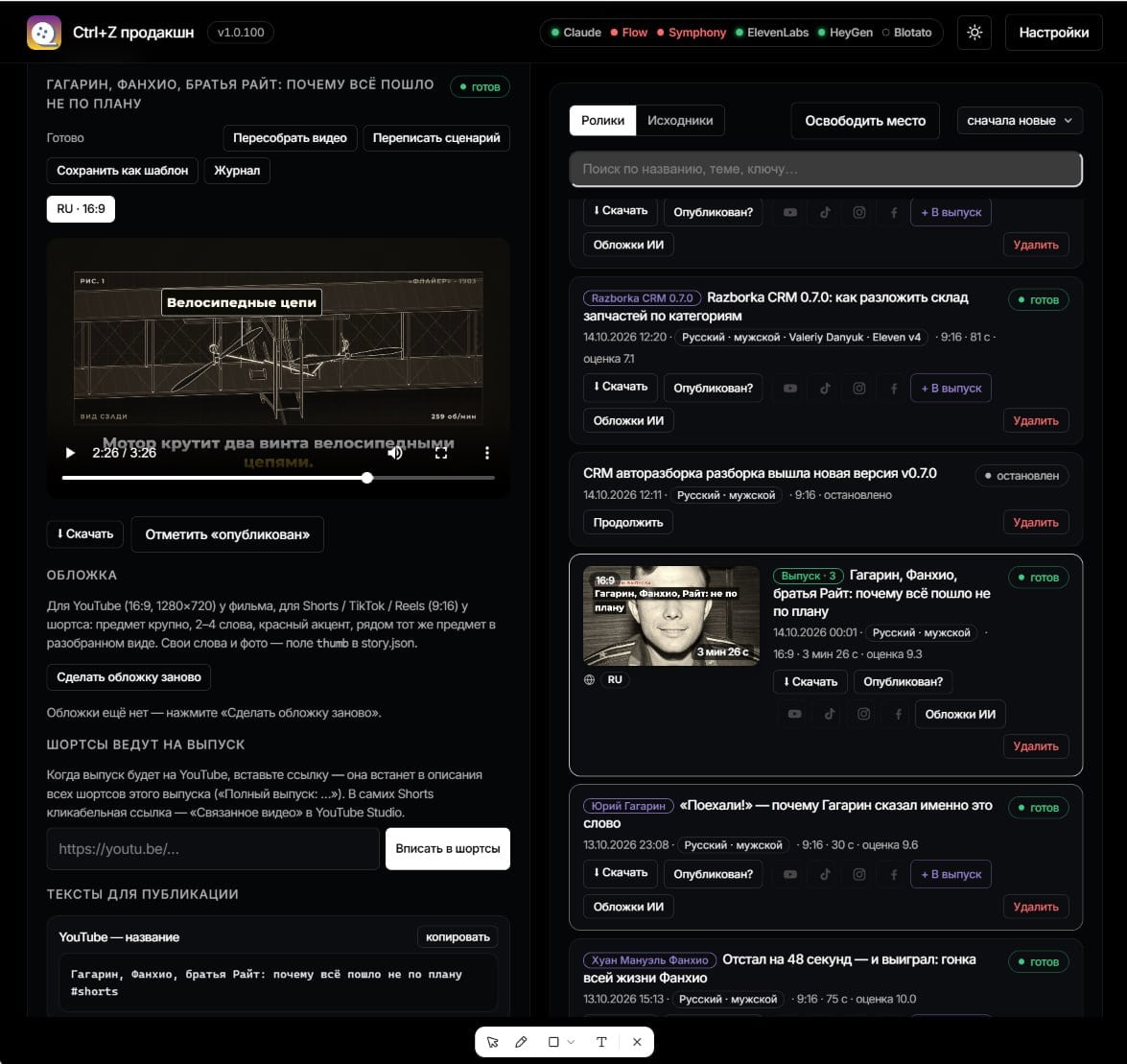
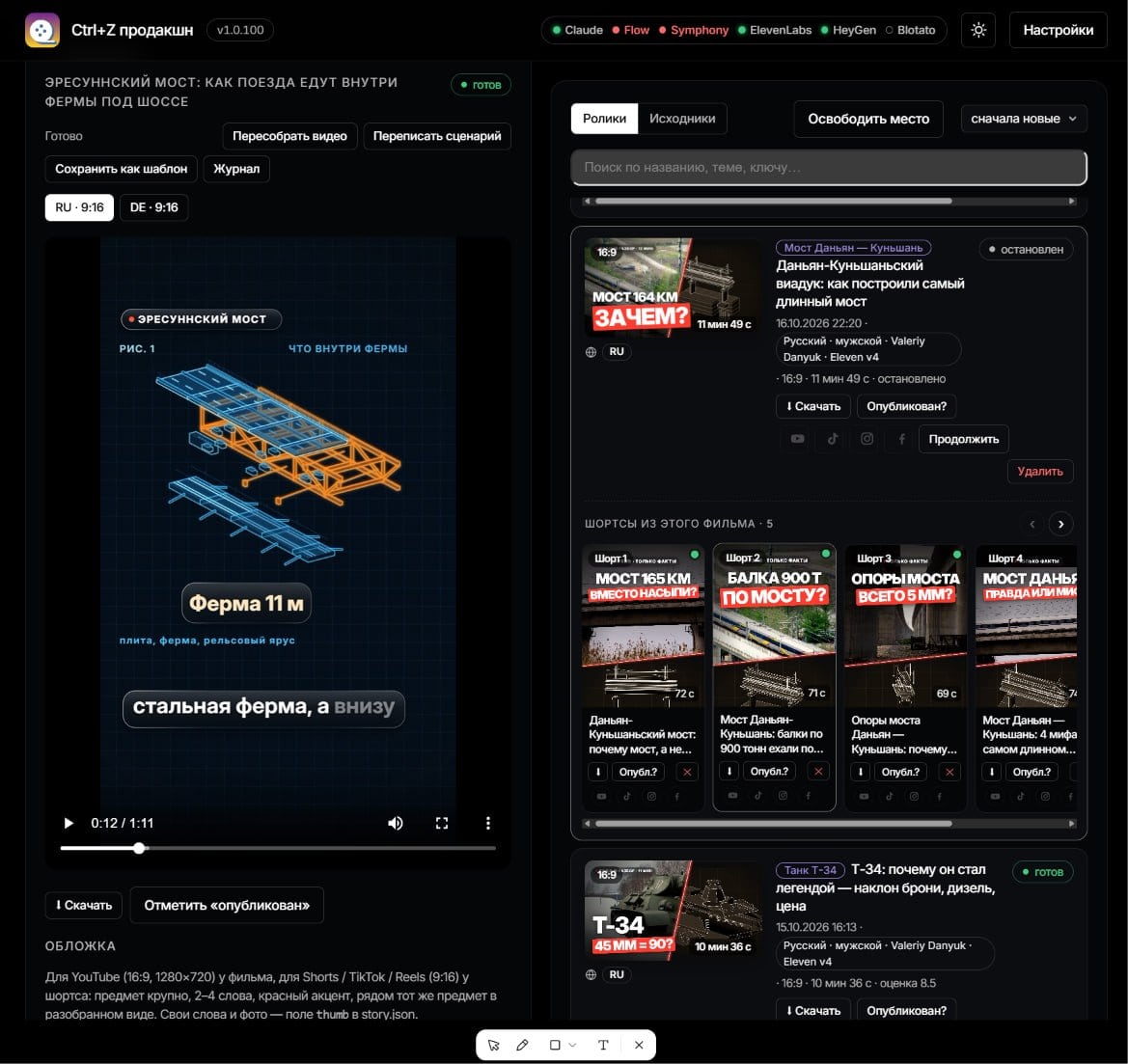
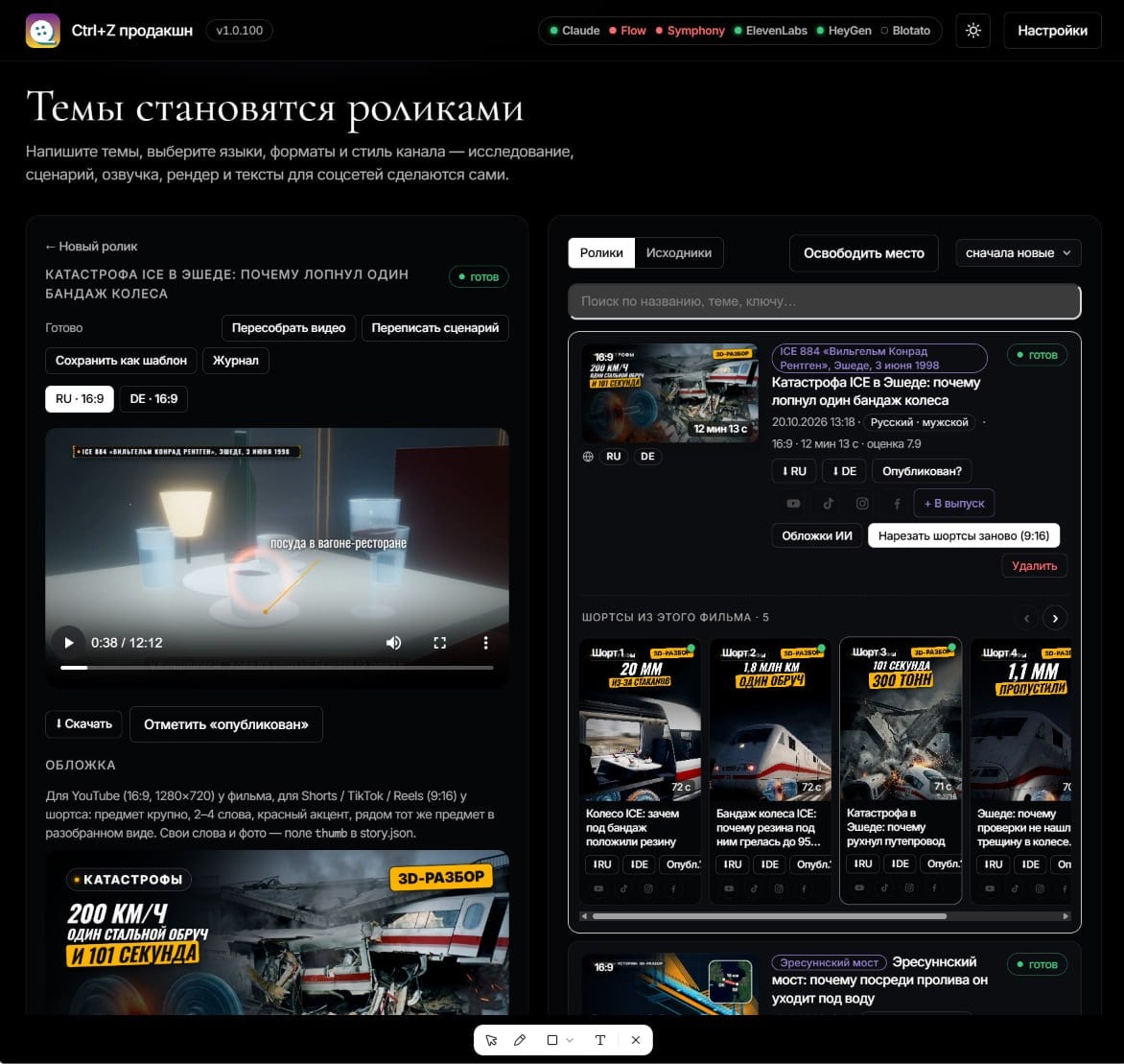
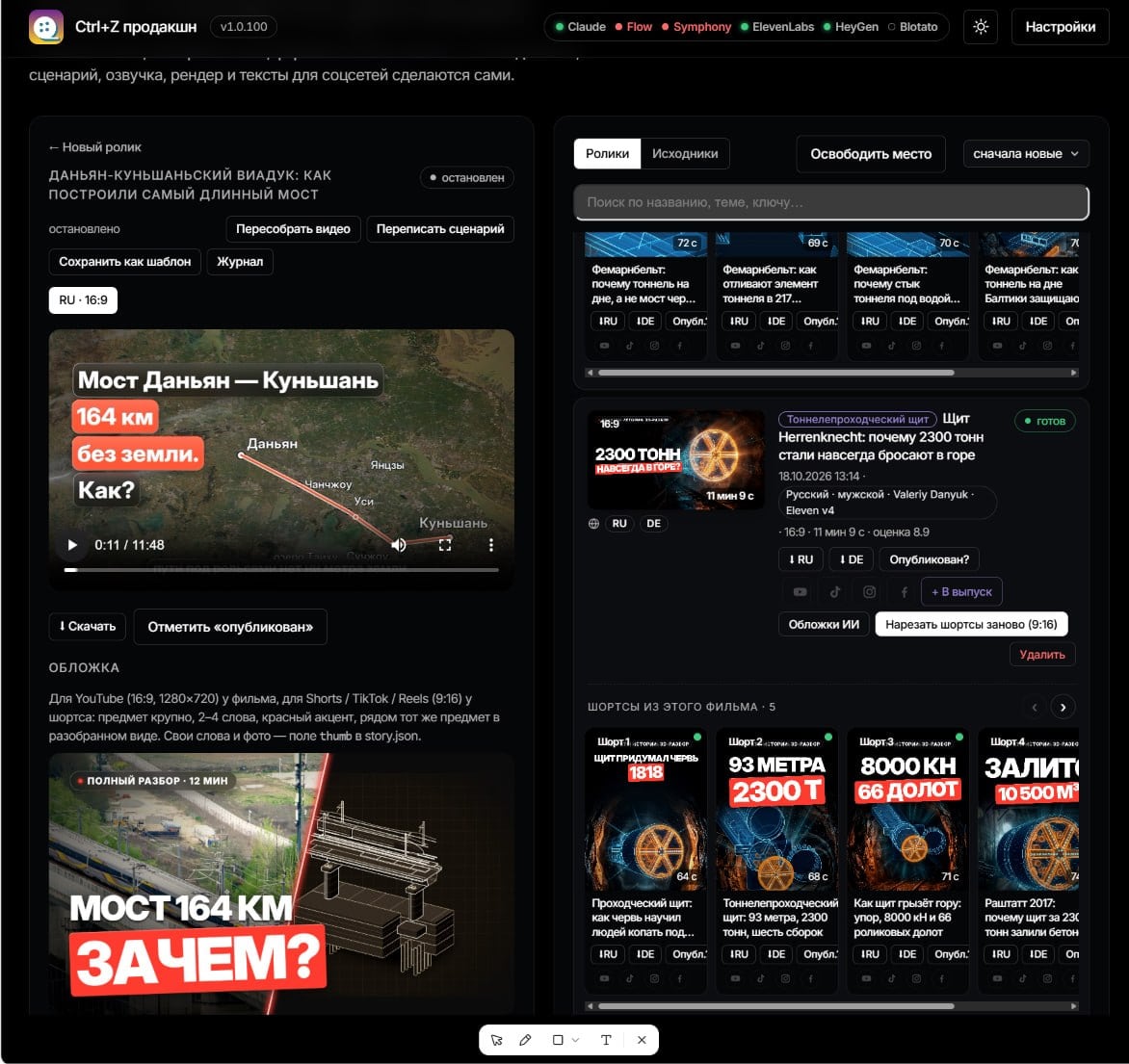
Who checks the video if there is no editor in the studio?
A system of AI agents is responsible for the quality of the finished video: it independently edits the footage, reviews the result, checks it for inconsistencies, and adds tags and footnotes throughout the story—without the need for a human timeline manager. A separate analytics system analyzes viewer reactions by video category and feeds the findings back into the scripts for future episodes.
The final decision—whether to publish the video as is or send it back for revision—rests with the channel's creator: agents prepare a version and a list of comments, and the person clicks the "publish" button.
The division of roles here is clear: agents take on repetitive, mechanical work—reviewing eleven minutes of footage frame by frame, checking the on-screen caption against the script, and remembering to cite the source of a figure. Humans are left with the difficult-to-formalize tasks—assessing whether the video holds attention, whether a scene is too drawn-out, and whether a joke at the beginning of the film sounds natural.
Why doesn't cheap voiceover videos work on YouTube anymore?
Starting in May 2026, YouTube will be rolling out Ask YouTube an AI search engine powered by the Gemini neural network. This fall, it will be available not only to Premium subscribers, but to all users in the US – on computers, phones, and TVs. The system answers viewers' questions using the content of the video itself: it analyzes frames, audio, and the entire transcript; the video title is secondary.
| The old approach | Ctrl+Z production | |
|---|---|---|
| Video sequence | A selection from licensed stocks | Custom 3D reconstruction and drawings based on actual dimensions |
| Explanation | Text read by a synthetic voice | A story with captioned details and visual graphics |
| What AI search sees | General footage without connection to specific facts of the video | Shots that literally show what the script says |
| Control | Manual timeline assembly | Text command in chat |
The project's creator expects Ask YouTube to reach Europe by the end of 2026—this is his own forecast; Google hasn't yet announced an official date for the region. But the logic is already clear: when a search engine can "watch" a video in its entirety, the gap between a video with supporting graphics and a video made from a spliced-together newsreel becomes noticeable to both the viewer and YouTube itself.
Google is already showing how this technology will extend beyond search to the viewing page itself. The model decides as the video progresses which parts it needs to provide an answer: loading individual frames, adjusting the viewing frequency, and choosing between image, audio, and transcript for a specific fragment. For a video where the only source of meaning is the voiceover, the system often has nothing to offer the viewer beyond subtitles. A video with a captioned 3D model and route map has something to offer even without sound.
How does one film turn into ten Shorts?
The publication is also organized according to a ready-made rule:
- The studio is putting together a main film that is up to 12 minutes long—this length fits exactly three YouTube commercial breaks.
- Short clips of 50-80 seconds each are automatically cut from the finished film for Shorts.
- Shorts work as promotional material: the viewer sees a short fragment with an answer to one question and then goes on to watch the full film.
Thus, one filming cycle immediately produces a whole clip of content for different viewing formats.
Who is this approach to video production suitable for?
If your business relies on regularly releasing content—videos, product cards, social media posts—sooner or later you'll run into the same dilemma: should you manually compile content each time, or set up a system that does it just once, via a text command? The Ctrl+Z production solution is a dialog-driven studio where AI works based on precise input data: dimensions, facts, and a script.
A similar principle—"describe in words what you need, and the AI will compile the result based on your data"—lies at the core of 1001site AI. The AI agent builds a website using an Instagram link, an old website, or a spreadsheet. The account's AI assistant then edits texts and photos based on a text command and works on your own Claude, ChatGPT, or Gemini key via MCP —without a token charge.
Sources
- Post from the "Business with AI" channel: https://t.me/promtvibeadd/454
- All Tech customer channel on YouTube: https://www.youtube.com/@tudotechhd
- German version of the channel: https://www.youtube.com/@tudotechhd_de
- Ask YouTube at Google I/O 2026 (AI Ultra, Gemini Spark): https://www.analyticsinsight.net/news/google-launches-ask-youtube-ai-voice-search-feature-at-io-2026
- Ask YouTube Video Understanding (agentic video understanding): https://www.searchenginejournal.com/google-video-understanding-ask-youtube/588123/
Project links
Discussion
Post and comments in Telegram channelБизнес с ИИ | Через замочную скважину · 21 October 2026
Questions and Answers
What is Ctrl+Z production?
The author's own development is a custom-built AI video studio, closed to public registration. It's managed via chat: text topics, language selection, and channel style are all set. The system then automatically assembles the research, script, voiceover, rendering, and texts for social media.
Why do you need an accurate 3D reconstruction if you can just show archival footage?
Some objects are simply impossible to photograph—for example, the joint between underwater tunnel elements or the gearbox shaft under the hood. A 3D reconstruction based on published dimensions shows this clearly and without licensing restrictions on other people's footage.
How do AI agents review finished videos without an on-staff editor?
Agents review the assembled video, check scenes against the script, add tags and footnotes, and return the version for revision if they find any discrepancies. The final decision—whether to publish the video or re-edit it—rests with the channel's creator.
Is it possible to see an example of how this works?
Yes, the author has made a step-by-step demo video - the link is in the sources below, as is the All Tech client channel where the finished films are released.
Subscribe to my Telegram channel
In the channel « Бизнес с ИИ | Через замочную скважину», I watch and talk about how clients who have contacted me use AI in their businesses. I encourage discussion—let me know in the comments, and I'll respond directly.
Similar projects
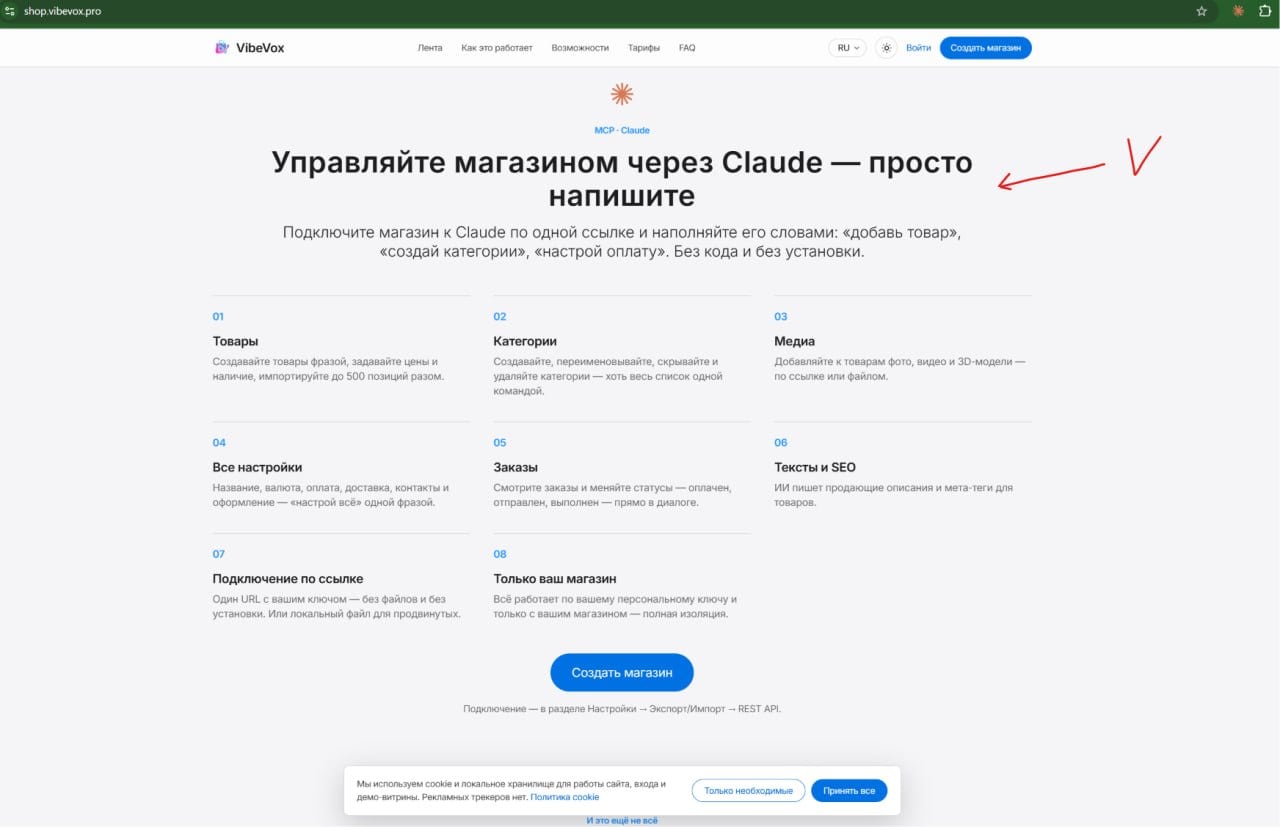
A 300-Product Catalog in a Few Minutes: How Claude Filled It
Case study: How Claude an AI, used MCP to analyze 3D models and fill an online store catalog with 300 products and categories using just a few chat commands.
How to Create a Website with Claude Without Code: How It Actually Works
Claude can both write website code and manage a finished website using Word. We'll explore both approaches, real prices, and the three steps to connecting via MCP.

Antiques Auction Platform: What We Built in 7 Days
Fair bidding, seller lot moderation, and a demo mode to combat the empty catalog at launch.