
TrendTraffic: How to Make AI-Powered TikTok Videos 4X Cheaper
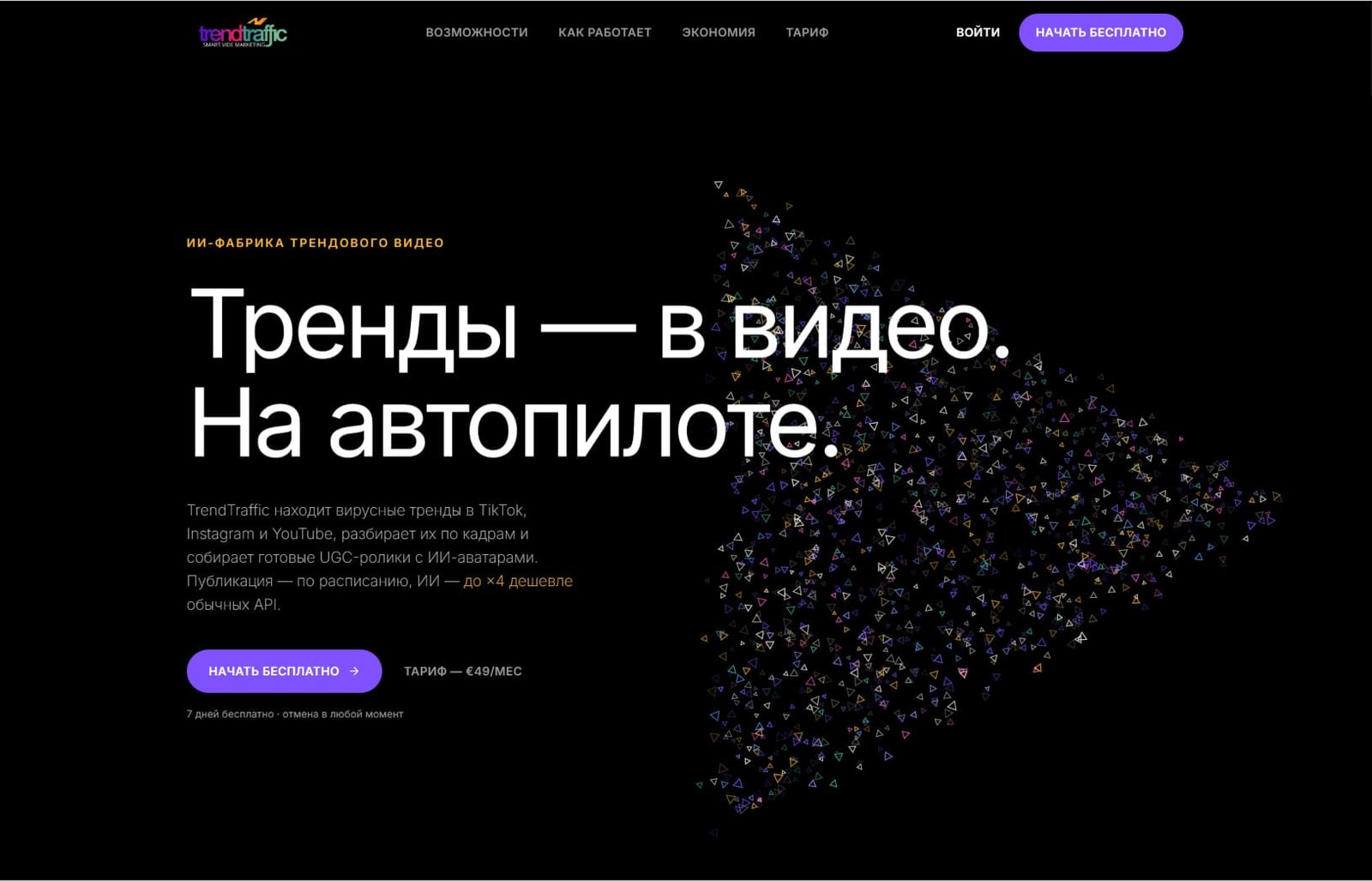
We've completed work on TrendTraffic, a video editor for TikTok and Instagram: the service automatically finds viral trends, parses them into frames, assembles a finished video with an AI avatar, and publishes it on a schedule. Along the way, we encountered a problem that affects any project that generates video using neural networks: a direct API call is several times more expensive than generating the same content through a standard subscription. We solved this with a proprietary Chrome extension—I'm explaining how it works.
Challenge: Expensive API vs. Affordable Subscription
The idea behind TrendTraffic is simple: what would previously have been done manually via command line prompts in Claude Code with MCP, we've consolidated into a single visual interface and added automatic analysis and publishing. The first version, which met strict technical specifications, was shown in the first post about the project.
A nuance that might have been overlooked if only calculated on paper emerged: the pricing of AI service APIs is structured in such a way that generating video directly through the API is significantly more expensive for the customer than creating the same content within the services themselves via a package subscription.
What We Got: A Video Editor on Autopilot for TikTok and Instagram
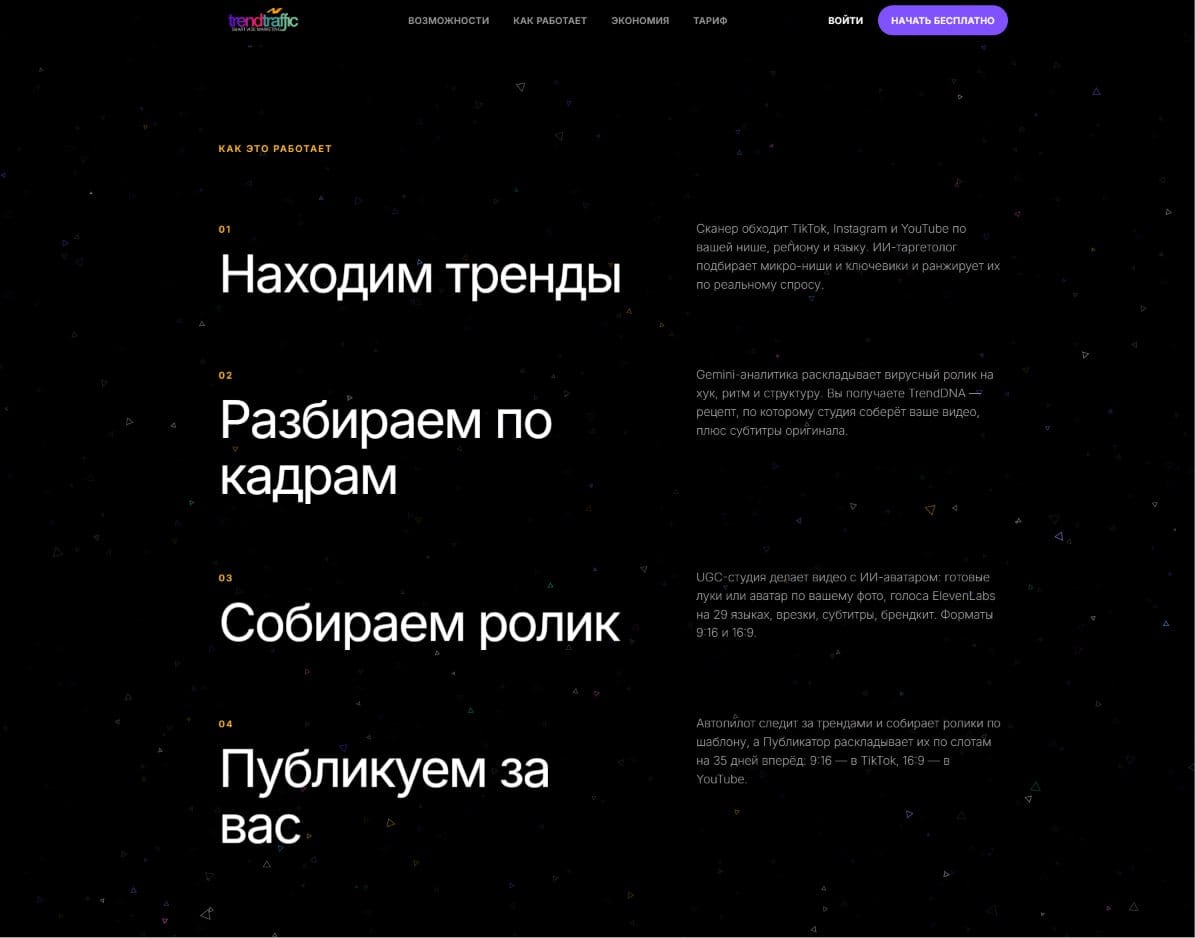
TrendTraffic covers the entire video process in four steps: finds trends, breaks them down frame by frame, assembles a new video, and publishes it for the user.
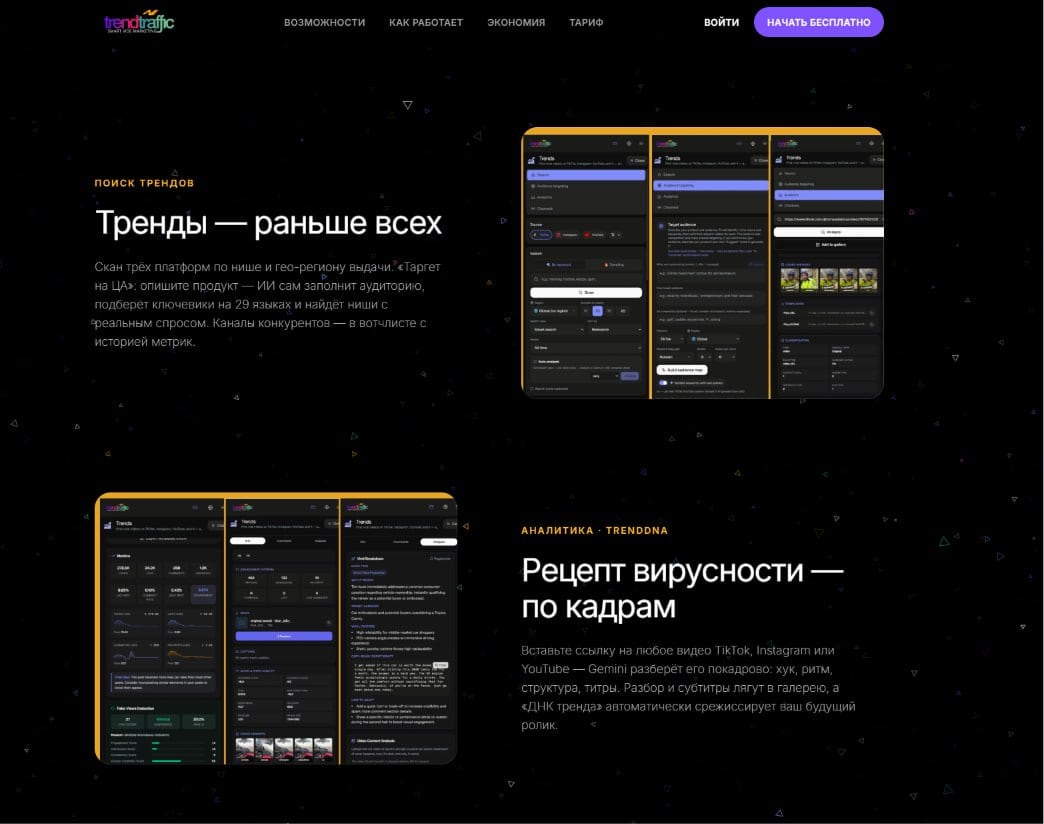
- We find trends. The scanner bypasses TikTok, Instagram, and YouTube by niche, region, and user language. Based on the product description, the AI automatically populates the audience, selects keywords in 29 languages, and finds niches with real demand.
- Let's break it down frame by frame. Gemini analytics breaks down a viral video into its hook, rhythm, and structure, producing "TrendDNA"—the recipe for the next video, plus subtitles for the original.
- Putting together a video. The UGC studio creates videos with an AI avatar: ready-made looks or an avatar based on your photo, ElevenLabs voices in 29 languages, 9:16 and 16:9 formats.
- We publish. The autopilot monitors trends and assembles videos using a template, and the publisher distributes the ready-made formats across platforms and slots 35 days in advance—9:16 on TikTok, 16:9 on YouTube.
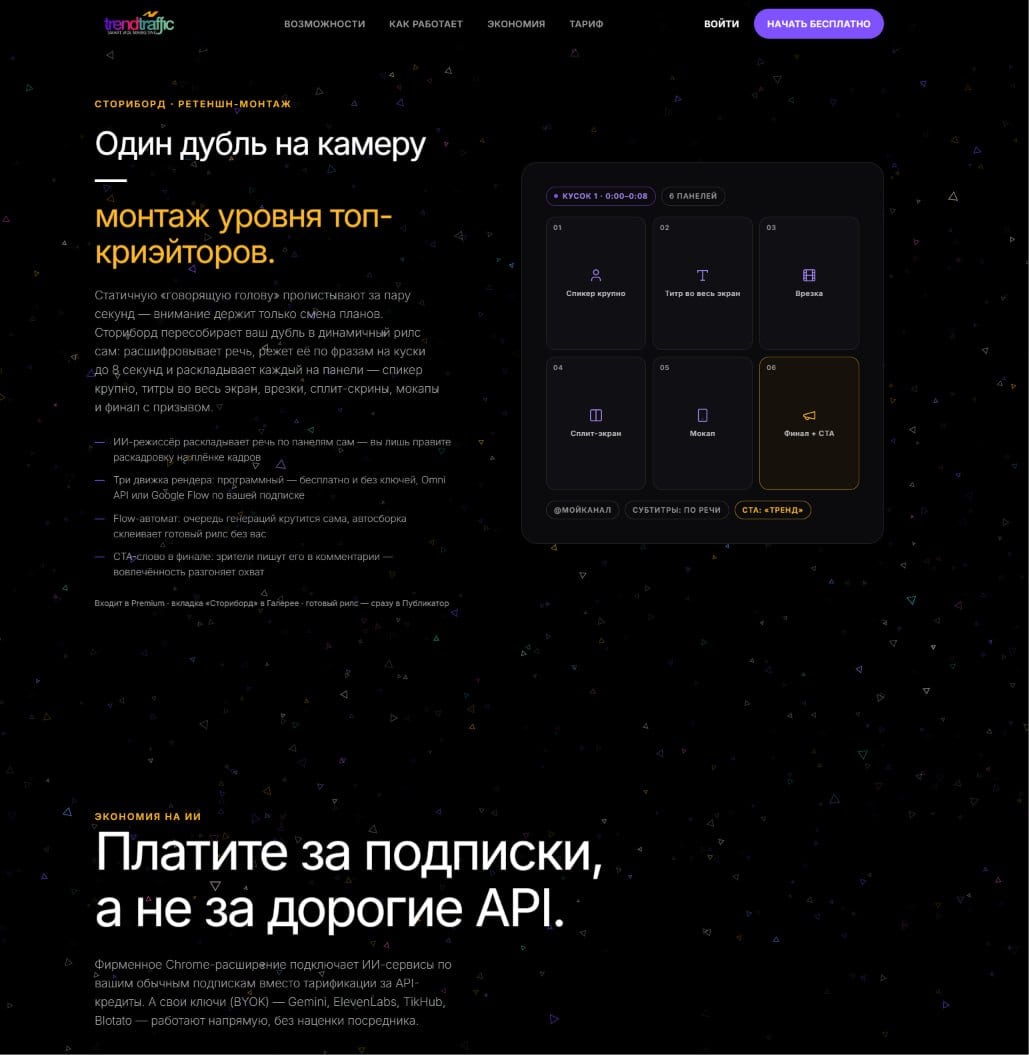
A separate feature is the "storyboard": the recording is cut into sections up to 8 seconds long and arranged across six panels (a large speaker, a full-screen title, an insert, a split-screen, a mockup, and an ending with a call to action). This transforms a static talking head into a dynamic montage without the need for manual editing in a video editor. Each panel can be rendered using three engines: free software editing, the paid Omni API, or a Google Flow subscription—the choice depends on how much you're willing to pay for the quality of a particular section.
Why does a direct API call cost more than a subscription?
In short: services like HeyGen or Google Flow sell access in two different ways, and their prices are different. A direct API call provides a token and minute counter for developers. A subscription to the service itself provides a bundled price for volume for the end user.
For a video editor that generates dozens of videos per day, the difference in pricing determines whether the product will be profitable at all. On paper, this seemed acceptable. However, during the initial testing, the difference in costs immediately hit the budget, forcing a change to the neural network connection architecture.
How does a Chrome extension solve the cost problem?
We've created a Google Chrome extension that connects HeyGen, Google Flow, and NotebookLM with the TrendTraffic platform through a single gallery, instead of accessing these services directly via API. This solution has two benefits:
- We don't duplicate the interfaces of the neural networks themselves—all new features and service updates are automatically available to our users, without us having to wait for them to be integrated.
- We've radically optimized our pricing for media file generation: users pay only for their regular HeyGen, Google Flow, or NotebookLM subscription—our API tokens are not added to their bill.
The cost per second of finished video has decreased significantly, while the quality remains the same. The extension changes the way the neural network renders, but the render itself and its quality remain the same.
What can be seen inside the working platform?
The bundle looks like part of the overall app.trendtraffic.pro application, not a separate plugin. Below is the final result, based on actual screenshots of the working interface.
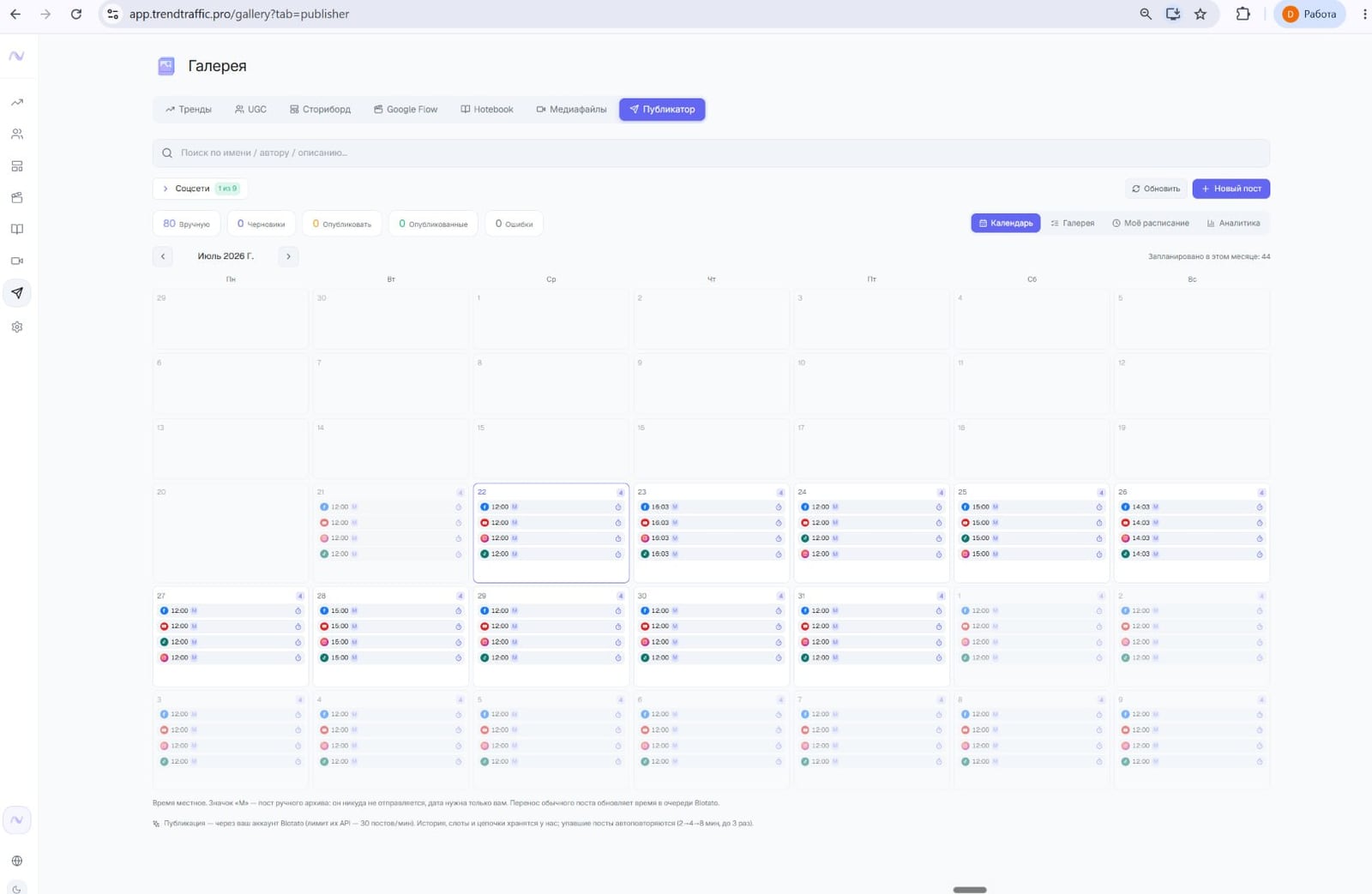
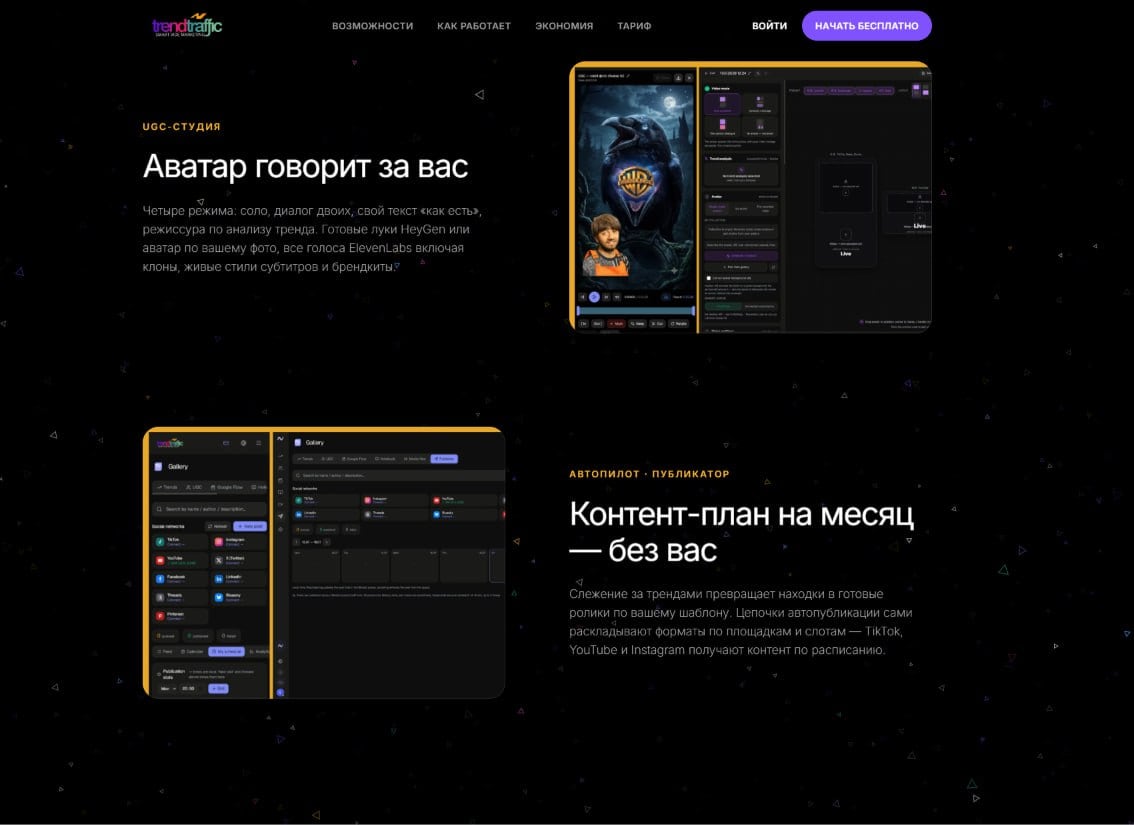
The publisher organizes completed videos by date and platform—the screenshot shows 44 posts planned for the month, all published via the Blotato API.
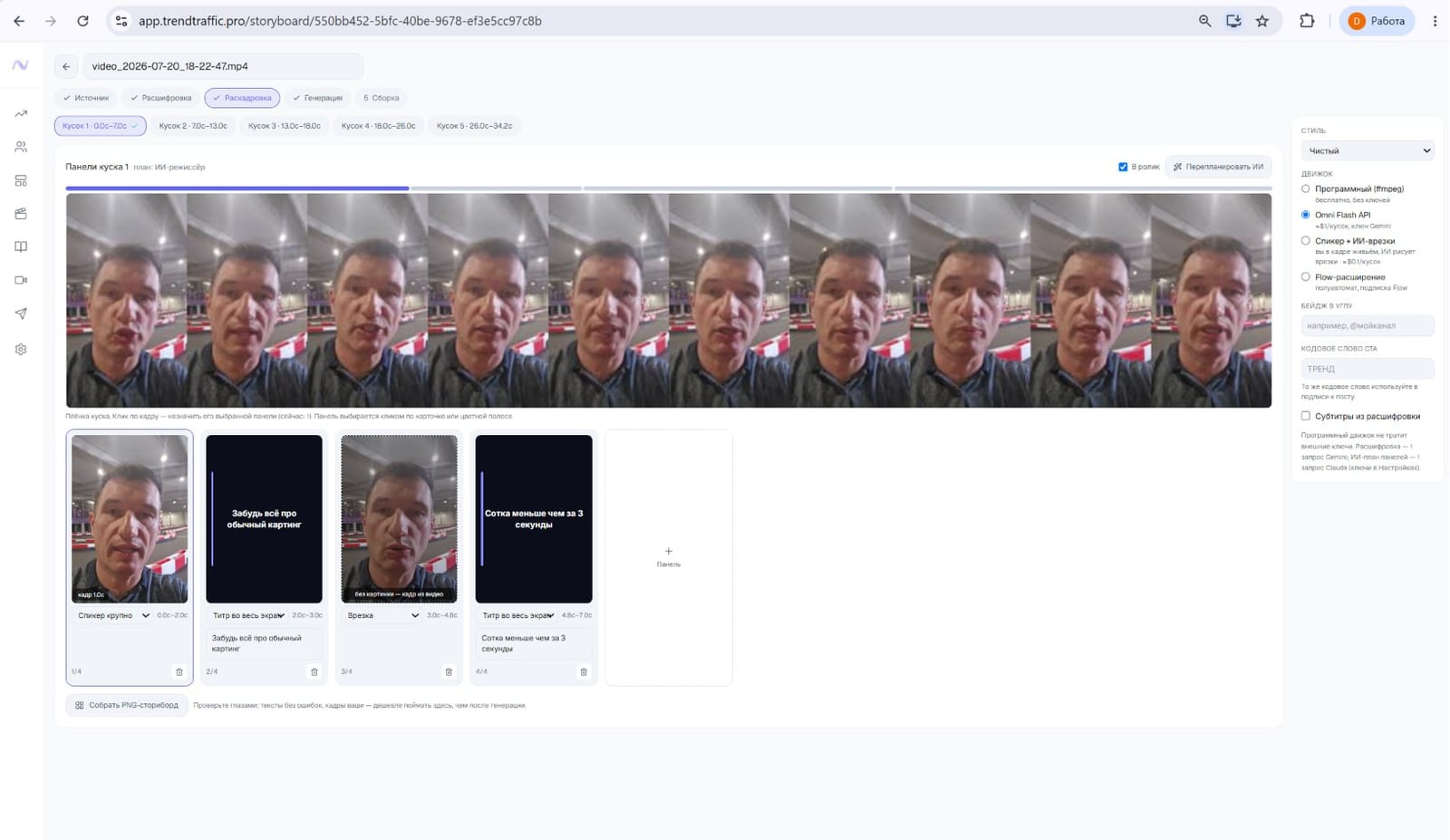
A real-life example is a source video about karting: the first segment of the video (seconds 0-7) is already laid out across four panels with captions reading "Forget all about ordinary karting" and "A hundred in less than 3 seconds." On the right is a choice of rendering engines: from free software editing to the Omni Flash API or a Google Flow extension, each with its own price.
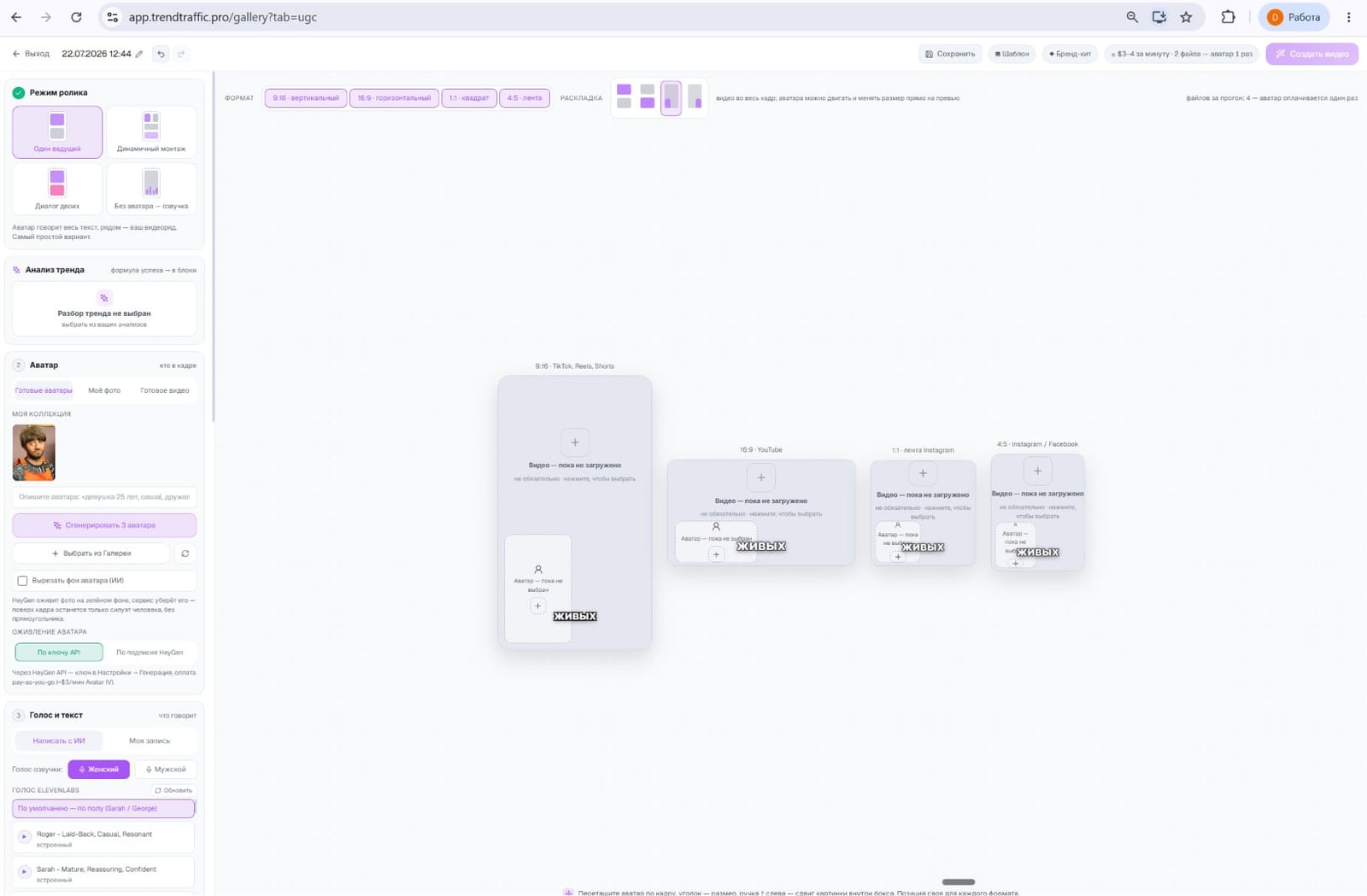
In the UGC video studio, users select the video mode (single presenter, two-person dialogue, dynamic editing, or no avatar), the format for a specific venue, and the ElevenLabs voice. Avatar rendering is a one-time fee for the entire run.
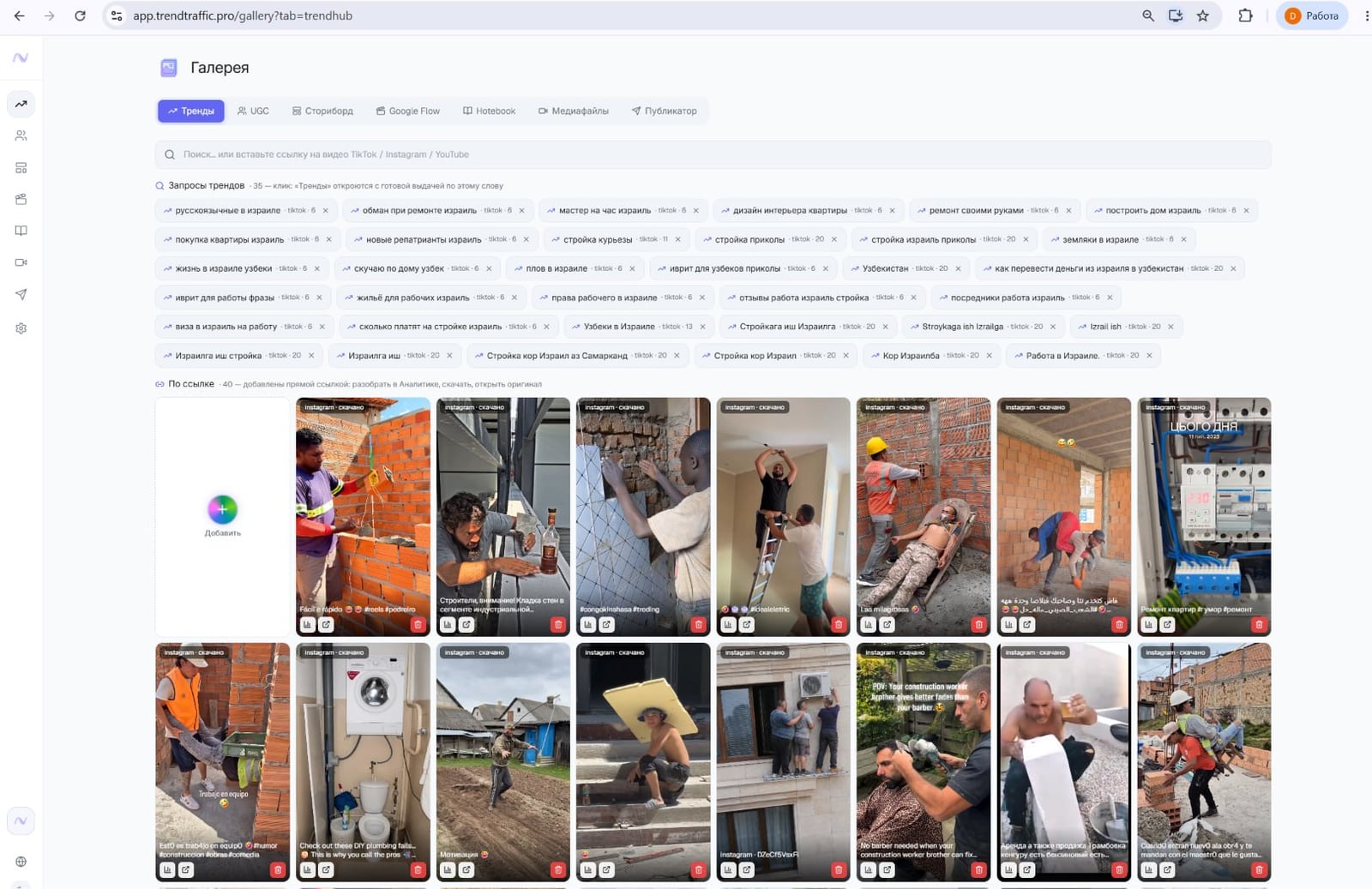
The Trending Gallery stores both saved search queries for a user's niche and videos manually added via a link—before AI parses them into frames and suggests a recipe for a new video.
How much cheaper did it turn out to be in practice?
TrendTraffic's landing page demonstrates this with a direct price comparison:
| What are we generating? | Directly via API | Via TrendTraffic |
|---|---|---|
| Rendering of HeyGen's AI avatar | about $3-4 per minute | about $1 per minute (your subscription) |
| Google Flow (Veo) Video Generation | expensive API credits | your Google Flow subscription |
| NotebookLM reviews and voiceovers | paid tokens | your Google subscription |
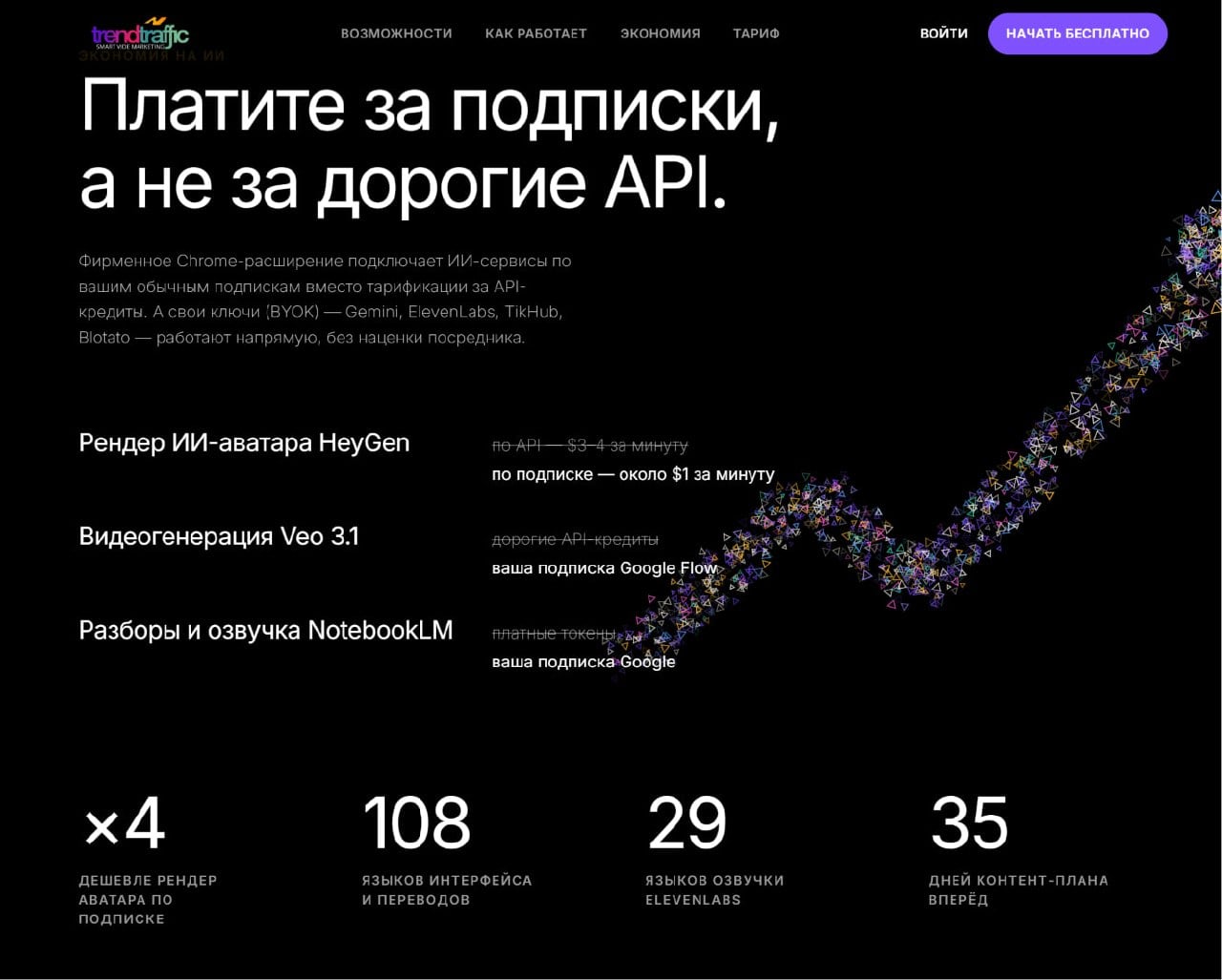
Here's a summary of the landing page's numbers: avatar rendering via subscription is approximately 4 times cheaper than the direct API, the interface and translations are available in 108 languages, ElevenLabs voiceover is available in 29 languages, and the publisher creates a content plan 35 days in advance.
Who is this approach to saving on AI suitable for?
If you're building a product on top of other AI services—video, voice, text generation—you'll sooner or later face the same question: should you charge an API fee or find a way to work through a regular user subscription? You may not have a ready-made browser extension, but the principle applies to any such product: first, compare both access methods using real-world usage—price documentation for developers won't reveal the real economics.
A similar principle of "AI works on your key, without a token premium" is already built into 1001site AI. The dashboard assistant and MCP connection use your Gemini, Claude, or ChatGPT key. Automatic posting of ads and products to Telegram and WhatsApp is configured once and then works without the website owner's intervention—the same concept as TrendTraffic's autopilot and publisher, but for your own website.
Sources
- Post from the "Business with AI" channel: https://t.me/promtvibeadd/434
- First post about the project: https://t.me/promtvibeadd/396
- TrendTraffic service: https://trendtraffic.pro/
- Trend discovery and audience targeting: https://tikhub.io/
- Auto-publishing: https://www.blotato.com/
Project links
Discussion
Post and comments in Telegram channelБизнес с ИИ | Через замочную скважину · 21 September 2026
Questions and Answers
Why is generating videos directly through the HeyGen or Google Flow API more expensive than through a subscription?
Pricing is structured differently: the API calculates tokens and minutes based on a direct call counter, while the subscription to the service itself is a volume-based package price. Using HeyGen as an example, the difference in the screenshot of TrendTraffic's landing page is about $3-4 per minute of rendering via the API versus about $1 per minute with a subscription.
What does the TrendTraffic Chrome extension do technically?
It connects HeyGen, Google Flow, and NotebookLM to the platform through a single gallery instead of direct API calls—so the work runs on your regular subscription to these services, without the need for separate token billing from an intermediary.
Is it possible to try TrendTraffic yet?
Yes, the service is currently being actively tested on trendtraffic.pro. The author of the post is offering channel readers promo codes in exchange for a review – please leave a comment below.
Subscribe to my Telegram channel
In the channel « Бизнес с ИИ | Через замочную скважину», I watch and talk about how clients who have contacted me use AI in their businesses. I encourage discussion—let me know in the comments, and I'll respond directly.
Similar projects

OmniFlow: How to shoot batches of videos in Google Flow and Google Vids
Case Study: The OmniFlow Chrome extension captures videos in batches to Google Flow and Google Vids via Claude —without API keys or per-second fees.

GPT-6 Astra and Claude Fable 5.1 have retired chatbots.
How an AI agent differs from a chatbot: analysis of a post and demo on a live sneaker store, plus how to transfer a catalog via link to 1001site AI.
Anything can be produced, but selling it is a real battle: how a sauce manufacturer can get onto retail shelves using AI
The DANSOY TM experience: why the traditional path to retail is almost closed for a small sauce manufacturer, why buyers monitor Chinese TikTok and venture capital funds, and how AI helps find two viable paths to shelf space.